Local businesses struggle to get found online when customers search for services “near me” or in their specific area. Optimizing posts with local keywords can dramatically improve your search rankings and bring more qualified customers to your door.
This guide is for small business owners, local service providers, and content creators who want to boost their visibility in local search results without breaking the bank on expensive marketing campaigns.
We’ll walk you through how to research and identify high-value local keywords that your customers actually use when searching for your services. You’ll also learn strategic placement techniques that help search engines understand exactly where you’re located and what areas you serve. Finally, we’ll cover how to create location-focused content that not only ranks higher but also connects with your local community and drives real business results.
Understanding Local Keywords and Their Impact on Search Rankings

Define local keywords and their role in geographic targeting
Local keywords are search terms that include specific geographic locations, helping businesses connect with customers in their immediate area. These keywords combine your main service or product with location identifiers like city names, neighborhoods, ZIP codes, or regional landmarks. When someone searches for “coffee shop downtown Seattle” or “plumber near me,” they’re using local keywords to find businesses within their geographic vicinity.
Geographic targeting through local keywords helps search engines understand exactly where your business operates and who should see your content. This targeting becomes especially powerful when optimizing posts with local keywords, as it signals to Google and other search engines that your content serves a specific community or region.
Identify key differences between local and general keywords
The distinction between local and general keywords shapes how you approach keyword optimization and content strategy. General keywords like “wedding photographer” cast a wide net but face enormous competition from businesses worldwide. Local keywords such as “wedding photographer Austin Texas” narrow your audience while dramatically reducing competition.
| General Keywords | Local Keywords |
|---|---|
| High competition | Lower competition |
| Broad audience | Targeted audience |
| Difficult to rank | Easier to rank |
| Generic intent | Specific location intent |
Local keywords typically show higher conversion rates because they capture users with immediate needs in your service area. Someone searching for “dentist” might be researching for future reference, but “emergency dentist Milwaukee” indicates urgent local intent.
Recognize how search engines prioritize location-based content
Search engines have evolved to understand user location and deliver geographically relevant results. Google’s algorithm considers multiple location signals when ranking content, including the searcher’s physical location, search history, and device settings.
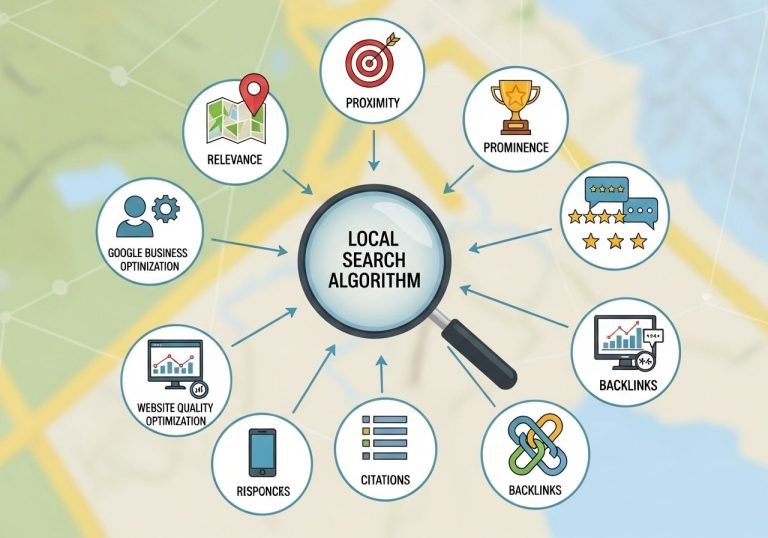
When optimizing content for search, Google analyzes several factors:
- User location data from IP addresses and GPS
- Local business information from Google My Business profiles
- Consistent NAP data (Name, Address, Phone) across the web
- Local citations and directory listings
- Reviews and ratings from local customers
The search engine also evaluates content relevance to specific geographic areas. Posts that mention local landmarks, events, or community issues often rank higher for location-based searches than generic content.
Analyze the connection between local keywords and user intent
Local keywords reveal distinct user intentions that differ significantly from general search queries. Understanding these intent patterns helps you create more effective SEO optimized blog posts that match what local searchers actually want.
Commercial local intent appears in searches like “buy furniture Phoenix” where users plan to make purchases locally. Informational local intent shows up in queries such as “best hiking trails Portland” where people seek location-specific knowledge. Navigational local intent drives searches like “Target Times Square hours” when users want to visit specific local businesses.
Local search intent often indicates higher purchase readiness. People searching with location modifiers usually need solutions quickly and prefer nearby options. This makes local keyword optimization particularly valuable for service-based businesses, restaurants, and retail stores.
The proximity factor also influences user behavior. Someone searching “yoga classes” might browse options casually, but “yoga classes downtown Chicago” suggests they’re ready to sign up for nearby classes. This immediate intent makes local keywords powerful tools for connecting with customers at the perfect moment in their decision-making process.
Research and Identify High-Value Local Keywords

Use location-specific keyword research tools effectively
Finding the right local keywords starts with using tools designed specifically for location-based searches. Google Keyword Planner remains your best starting point, but add geographic modifiers to your seed keywords. Instead of just searching for “pizza delivery,” try “pizza delivery Chicago” or “pizza delivery near me.”
Google My Business Insights reveals what terms people use to find businesses like yours in your area. Check your account regularly to spot trending local search phrases. The “Search queries” section shows exactly what customers typed before finding your listing.
Semrush and Ahrefs offer location-specific keyword research features that filter results by city or region. These tools help you discover variations you might miss, like how people in different neighborhoods refer to the same service. For example, some areas might search for “auto repair” while others prefer “car mechanic.”
Google Trends becomes incredibly valuable when you add location filters. You can see seasonal patterns in your area and compare search volume between different cities. This helps prioritize which locations to target first when optimizing blog posts for local SEO.
Analyze competitor local keyword strategies
Your local competitors already know what works in your market. Start by identifying who ranks well for location-specific searches related to your business. Look beyond direct competitors – sometimes businesses in adjacent industries target the same local keywords.
Use tools like Semrush or Ahrefs to analyze competitor websites and discover which local keywords drive their organic traffic. Pay special attention to their location pages and blog posts that mention your city or region. These insights reveal gaps in your own local keyword strategy.
Examine competitor Google My Business profiles and website content for location-specific language patterns. Notice how they incorporate neighborhood names, local landmarks, or regional slang into their content. This research helps you understand the local search language your audience actually uses.
Discover neighborhood and city-specific search terms
Local search behavior varies dramatically between different areas, even within the same city. People in downtown areas might search differently than those in suburban neighborhoods. Spend time researching hyperlocal terms that resonate with each specific area you serve.
Use Google’s autocomplete feature by typing your service plus different neighborhood names. This reveals popular search combinations like “dentist downtown,” “dentist midtown,” or “dentist [specific neighborhood name].” Each variation represents potential traffic you could capture through targeted content.
Social media listening tools help uncover how locals actually talk about your area. Check Facebook groups, NextDoor discussions, and local subreddit conversations to find colloquial terms and nicknames for neighborhoods, streets, or landmarks. These authentic phrases often perform better than formal geographic names.
Local newspapers and community websites provide goldmines of location-specific terminology. They use language that resonates with your local audience and often mention events, landmarks, or issues that could become valuable long-tail keywords for your content.
Evaluate keyword difficulty and search volume for local terms
Local keywords typically have lower search volumes than national terms, but they often convert better and face less competition. A keyword with 100 monthly local searches might be more valuable than a national keyword with 10,000 searches if it targets people ready to buy in your area.
Keyword difficulty scores work differently for local terms. National SEO tools might show high difficulty for competitive keywords, but adding location modifiers often dramatically reduces competition. “Personal trainer” might be extremely competitive, while “personal trainer [your city]” could be much easier to rank for.
Balance search volume against business relevance when evaluating local keywords. Sometimes lower-volume terms like “emergency plumber [neighborhood]” drive more qualified leads than higher-volume generic terms. Track conversion rates alongside rankings to identify your most profitable local keywords.
Consider seasonal fluctuations in local search patterns. Tourist destinations see different keyword volumes throughout the year, while service businesses might notice patterns tied to weather or local events. This data helps you plan content calendars and optimize posting schedules for maximum impact.
Strategic Placement of Local Keywords in Your Content

Optimize Title Tags with Location-Based Keywords
Title tags serve as the first impression search engines and users get of your content. When optimizing blog posts for local search, your title tag becomes the prime real estate for location-specific keywords. Place your primary local keyword near the beginning of your title, ideally within the first 60 characters to ensure full visibility in search results.
A well-crafted local title follows the pattern of “Primary Keyword + Location + Value Proposition.” For example, instead of “Best Coffee Shops,” use “Best Coffee Shops in Downtown Portland – Local’s Guide 2024.” This approach signals geographic relevance while maintaining user appeal.
Consider creating variations that target nearby areas too. If you’re targeting “Austin,” also think about “Central Austin,” “Austin Metro,” or specific neighborhoods like “South Lamar Austin.” This strategy helps capture searches from people who might phrase their location queries differently.
Avoid keyword stuffing in titles. Search engines have become sophisticated enough to recognize when you’re gaming the system, and users will skip over titles that read unnaturally. Focus on one primary location per title tag while ensuring it sounds appealing to actual readers.
Incorporate Local Terms Naturally in Meta Descriptions
Meta descriptions don’t directly impact rankings, but they significantly influence click-through rates, which can boost your local search performance. Your meta description should expand on the location promise made in your title tag while providing compelling reasons to click.
Start by weaving location-specific language into your descriptions naturally. Instead of forcing “New York” into every sentence, use phrases like “serving the NYC community,” “located in the heart of Brooklyn,” or “helping Manhattan residents.” These variations feel more conversational and avoid the robotic tone that hurts user experience.
Include local landmarks, neighborhoods, or regional references that locals would recognize and search for. A restaurant review might mention being “steps from Central Park” or “in the Financial District,” while a service business could reference being “family-owned since 1995” or “trusted by Bay Area homeowners.”
Keep descriptions between 150-160 characters to prevent truncation in search results. Use action words that create urgency or highlight unique local value propositions. “Discover,” “explore,” “find,” and “experience” work well for local content, especially when paired with specific location benefits.
Balance Keyword Density Without Compromising Readability
The sweet spot for local keyword density typically falls between 1-2% of your total word count. This means in a 500-word blog post, your primary local keyword should appear 5-10 times. However, density alone doesn’t tell the whole story – placement and context matter more than raw frequency.
Distribute your local keywords strategically throughout your content rather than clustering them in one section. Place them in your opening paragraph, at least one subheading, naturally within body paragraphs, and in your conclusion. This distribution signals topical relevance without triggering spam filters.
Use semantic variations and related terms to create natural flow. Instead of repeating “Chicago pizza restaurants” five times, mix in “Windy City pizzerias,” “local Chicago eateries,” “pizza joints in Chicago,” and “Chi-town pizza spots.” Search engines understand these variations refer to the same concept while readers appreciate the variety.
Read your content aloud after adding local keywords. If it sounds forced or repetitive, you’ve likely crossed the line into over-optimization. Quality content that serves readers will always outperform keyword-stuffed posts that sacrifice readability for perceived SEO benefits.
Create a keyword map before writing to plan where each term will naturally fit. This prevents the temptation to shoehorn keywords into inappropriate places and helps maintain the conversational tone that both users and search engines prefer.
Create Location-Focused Content That Ranks Higher
Develop Neighborhood and City-Specific Landing Pages
Creating dedicated landing pages for different neighborhoods and cities gives you powerful tools for optimizing blog posts with local keywords. Each page should target specific geographic areas where your audience lives and works. Start by researching which neighborhoods drive the most traffic to your business, then build comprehensive pages that showcase your expertise in those areas.
Your neighborhood-focused pages need unique content that goes beyond basic contact information. Include detailed descriptions of local market conditions, area demographics, and specific services you offer in that location. When optimizing content for search, weave in naturally occurring phrases like “downtown Seattle real estate” or “Brooklyn Heights family services” throughout your copy.
Make each landing page a resource hub for that specific area. Add local business directories, transportation information, and neighborhood guides that visitors actually find useful. This approach helps with keyword optimization while building trust with potential customers who want to work with someone who truly knows their area.
Write Locally Relevant Blog Posts and Articles
Blog posts SEO success comes from creating content that speaks directly to local interests and concerns. Write about topics that matter to people in your specific geographic area. Cover local business openings, neighborhood changes, seasonal events, and community news that your target audience cares about.
Your locally relevant articles should answer questions people in your area actually ask. Research local forums, social media groups, and community boards to understand what’s on people’s minds. Then create SEO optimized blog posts that provide genuine value while naturally incorporating location-based keywords.
Mix evergreen local content with timely pieces. Write comprehensive guides about “Best Family Activities in [Your City]” alongside news-driven posts about local developments. This balance keeps your content fresh while building authority for location-specific searches.
Include Local Landmarks and Cultural References
Mentioning recognizable local landmarks helps search engines understand your geographic relevance while making your content more relatable to local readers. Reference popular spots like “near the Central Library” or “just off Main Street by the old courthouse” to create immediate connection with your audience.
Cultural references work even better than landmarks for post optimization. Talk about local traditions, popular restaurants, sports teams, and community quirks that only locals would understand. These references signal to both search engines and readers that you’re genuinely part of the community.
When optimizing keywords around landmarks and culture, focus on how people actually talk about these places. Use the informal names locals prefer, not just official titles. If everyone calls it “The Commons” instead of “Municipal Park,” use the common term in your keyword optimization strategy.
Address Region-Specific Problems and Solutions
Every area faces unique challenges, and addressing these directly improves your chances of ranking for local searches. Write about weather-related issues, local regulations, transportation problems, or economic concerns that affect your specific region.
Create detailed solutions for these regional problems through your blog posts SEO strategy. If you’re in a flood-prone area, write comprehensive guides about flood preparation and recovery. For regions with harsh winters, create content about winterization and seasonal maintenance.
Your region-specific problem-solving content should demonstrate deep local knowledge. Reference local resources, mention specific local service providers, and include contact information for relevant government offices or community organizations. This approach builds trust while naturally incorporating location-based keywords.
Feature Local Events and Community Involvement
Covering local events gives you fresh content opportunities while strengthening your community connections. Write preview posts before major events, live coverage during events, and follow-up summaries afterward. This creates multiple pieces of keyword optimized content from single local happenings.
Your event coverage should go beyond basic announcements. Interview organizers, highlight interesting participants, and share behind-the-scenes stories that make your content unique. Include practical information like parking details, nearby restaurants, and what to expect, making your posts genuinely helpful for attendees.
Document your own community involvement through your blog posts. Share stories about local volunteer work, sponsorships, or community partnerships. This content helps with post link optimization when other local organizations link back to your coverage, while also building your reputation as an engaged community member.
| Content Type | SEO Benefit | Community Impact |
|---|---|---|
| Event Previews | Fresh keyword opportunities | Builds anticipation |
| Live Coverage | Real-time engagement | Showcases involvement |
| Follow-up Stories | Long-term traffic | Strengthens relationships |
| Volunteer Stories | Authority building | Demonstrates values |
Technical Optimization for Local Search Success

Implement schema markup for local business information
Schema markup acts like a translator between your website and search engines, helping Google understand exactly what your business offers and where you’re located. When you add structured data markup to your pages, you’re essentially providing search engines with a detailed roadmap of your local business information.
The most important schema types for local businesses include LocalBusiness, Organization, and Place markup. These structured data formats tell search engines your business name, address, phone number, operating hours, and service areas. This information directly impacts how your business appears in local search results and Google My Business listings.
Start by implementing basic LocalBusiness schema on your homepage and contact page. Include your NAP (Name, Address, Phone) information, business hours, and accepted payment methods. For service-area businesses, use the ServiceArea property to specify the geographic regions you serve.
Product and service pages benefit from Offer and Service schema markup. This helps search engines understand your pricing, availability, and service descriptions. When optimizing blog posts with local keywords, add Article schema with location-specific information in the headline and description properties.
Google’s Rich Results Test tool lets you validate your schema implementation before going live. Properly implemented schema markup can increase your chances of appearing in rich snippets, local pack results, and knowledge panels.
Optimize URL structures with geographic identifiers
Your URL structure plays a crucial role in local SEO success and helps both users and search engines understand your content’s geographic relevance. Clean, descriptive URLs containing location identifiers improve your local keyword optimization efforts significantly.
Create URL patterns that include your target city, neighborhood, or region. For example, use “/chicago-plumbing-services/” instead of “/services-123/”. This approach makes your URLs more user-friendly while signaling geographic relevance to search engines.
For multi-location businesses, develop a consistent URL hierarchy that reflects your geographic targeting strategy. Structure URLs like “/locations/[city-name]/[service]/” or “/[state]/[city]/[category]/”. This creates clear content organization and helps with internal linking strategies.
Blog posts targeting local keywords should include geographic modifiers in their URLs when relevant. A post about “Best Coffee Shops in Seattle” works better with “/best-coffee-shops-seattle/” than “/coffee-shops-blog-post-47/”. Keep URLs concise while maintaining keyword relevance.
Avoid changing established URLs unless absolutely necessary. If you must update URL structures, implement proper 301 redirects to preserve link equity and prevent broken links that could hurt your SEO optimization keywords performance.
Create location-specific internal linking strategies
Strategic internal linking helps search engines understand your site’s topical authority and geographic focus. When optimizing content for search, your internal link structure should reinforce location-based relationships between pages and posts.
Link from your main service pages to location-specific landing pages using geographic anchor text. For instance, link to your “Denver Dental Services” page from your main “Dental Services” page using location-rich anchor text like “dental services in Denver” rather than generic phrases like “click here.”
Create topic clusters around geographic areas by linking related local content together. Connect your “Chicago Restaurant Guide” blog post to other Chicago-focused content like “Chicago Events Calendar” and “Best Chicago Neighborhoods.” This cross-linking strategy strengthens your site’s local topical authority.
Use contextual internal links within blog content to connect to relevant local landing pages. When writing about local topics, naturally link to your service pages, contact information, and other location-specific content. This approach improves user experience while boosting your local keyword optimization efforts.
Build links from high-authority pages to newer location-specific content. Your homepage and established service pages likely have more link equity, so use them to boost newer local pages. Monitor your internal link distribution to ensure important local pages receive adequate internal link support for better search performance.
Monitor and Improve Your Local Keyword Performance

Track Local Search Rankings and Visibility Metrics
Monitoring your local search performance starts with setting up proper tracking systems. Google Search Console provides essential data about how your content appears in location-based searches. Set up location-specific filters to see which queries bring visitors from your target areas. Track your rankings for primary local keywords across different search engines, not just Google.
Use tools like SEMrush, Ahrefs, or Moz to monitor your local keyword positions over time. Create custom dashboards that show your progress for city-specific terms, neighborhood keywords, and regional phrases. Pay attention to your local pack rankings – those top three business listings that appear with map results.
Monitor your Google My Business insights to understand how people discover your content through local searches. Track metrics like search queries, customer actions, and photo views. These insights reveal which local keywords drive the most engagement and help you understand searcher intent in your area.
Analyze Traffic Patterns from Location-Based Searches
Google Analytics reveals valuable patterns about your local search traffic. Create location-based segments to see which geographic areas send the most visitors to your optimized content. Look for seasonal trends in different regions – some areas might search more during specific months or events.
Examine the behavior flow of visitors who arrive through local searches. Do they stay longer on your site? Which pages do they visit next? This data helps you understand if your local keyword optimization attracts engaged visitors or just casual browsers.
Study your bounce rates for location-specific landing pages. High bounce rates might indicate your content doesn’t match local search intent, while low bounce rates suggest your local keyword strategy resonates with searchers.
Adjust Keyword Strategy Based on Performance Data
Regular performance analysis should drive your keyword optimization decisions. If certain local terms consistently underperform, investigate why. Maybe the search volume is too low, or competitors dominate those keywords. Shift focus to more promising opportunities.
Look for emerging local trends in your analytics. New shopping centers, local events, or community developments create fresh keyword opportunities. Update your content to include these trending local terms before competitors catch on.
Review your click-through rates for different local keywords. Low CTRs might mean your titles and meta descriptions need work, even if you rank well. Test different approaches to improve how your content appears in search results.
Test Different Local Keyword Variations for Better Results
A/B testing reveals which local keyword variations perform best for your content. Try different combinations of city names, neighborhood references, and regional terms. Test “near me” variations against specific location names to see what your audience prefers.
Experiment with long-tail local keywords versus shorter, more competitive terms. Sometimes “best pizza downtown Phoenix” outperforms “Phoenix pizza” because it captures more specific search intent. Create multiple versions of key pages to test these variations.
Test different keyword densities and placement strategies. Some content performs better with keywords in the first paragraph, while others work best with keywords scattered throughout. Monitor which approaches generate more local search traffic and engagement.
| Testing Variable | What to Monitor | Success Indicator |
|---|---|---|
| Keyword placement | Click-through rates | Higher CTR from local searches |
| Long-tail vs short-tail | Traffic volume | More qualified local visitors |
| Location specificity | Engagement metrics | Longer time on site |
| Keyword density | Search rankings | Improved positions |

Local keywords are your secret weapon for connecting with customers right in your neighborhood. When you combine smart research with strategic placement and location-focused content, you create posts that search engines love and local customers actually find. The technical stuff matters too – proper schema markup and consistent NAP information tell Google exactly where you belong in local search results.
Success doesn’t happen overnight, but tracking your progress keeps you on the right path. Start small by picking one or two local keywords that match what your customers are searching for, then build your content strategy around them. Your local audience is out there looking for exactly what you offer – make sure they can find you when they search.
FAQs
What are local keywords and why do they matter?
Local keywords are search terms that include location-based words like your city, neighborhood, or region. They matter because when people search for businesses or services “near me” or in specific areas, search engines use these keywords to show relevant local results. Using them helps your content appear when potential customers in your area are looking for what you offer.
How do I find the right local keywords for my business?
Start by thinking about how your customers would search for your services. Use tools like Google’s Keyword Planner or even just Google’s autocomplete feature. Type your main service plus your city name and see what suggestions come up. Also look at what your local competitors are using and check Google My Business insights to see what terms people use to find your business.
Where should I place local keywords in my posts?
Put local keywords in your post titles, headings, and naturally within your content. Include them in your meta descriptions and image alt text too. The key is to make it sound natural – don’t just stuff keywords everywhere. Write for people first, then optimize for search engines.
How many local keywords should I use in one post?
Focus on one main local keyword phrase per post, then include 2-3 related variations naturally throughout your content. Don’t go overboard – if you use too many, your writing will sound robotic and Google might actually penalize you for keyword stuffing.
Should I create separate posts for different locations I serve?
Yes, if you serve multiple cities or areas, create dedicated posts or pages for each location. This helps you rank better for searches in those specific areas. Each post should focus on that particular location and include relevant local information, not just the same content with different city names.
What’s the difference between local keywords and regular keywords?
Regular keywords focus on your product or service (like “plumber” or “pizza delivery”). Local keywords add location information (like “plumber in downtown Seattle” or “pizza delivery Capitol Hill”). Local keywords help you compete in your specific area rather than trying to rank nationally against much bigger competitors.
How do I make my local keyword content sound natural?
Write like you’re talking to a neighbor about your business. Instead of saying “We are the best dentist in Portland” five times, try variations like “Our Portland dental office,” “serving families in the Portland area,” or “located in downtown Portland.” Tell stories about local events, mention local landmarks, and write about community involvement.
Do I need to mention my exact address in every post?
No, you don’t need your full address in every post. Just mentioning your city, neighborhood, or general area is usually enough. Save your complete address for your contact page and Google My Business listing. Focus on creating valuable content that happens to include local references.
How long does it take to see results from local keyword optimization?
You might start seeing small improvements in 4-6 weeks, but real results usually take 3-6 months. Local SEO is a marathon, not a sprint. Keep creating good content with local keywords, and be patient. The results will build up over time as Google recognizes you as a relevant local business.
Can I use the same local keywords as my competitors?
Yes, you can target the same local keywords, but try to find your own angle. If every plumber in town is targeting “emergency plumber Boston,” maybe you could focus on “family-owned plumber in South Boston” or “eco-friendly plumbing services Boston.” Look for gaps in what your competitors are doing and fill those spaces.