What is SSL and Why Should You Care?
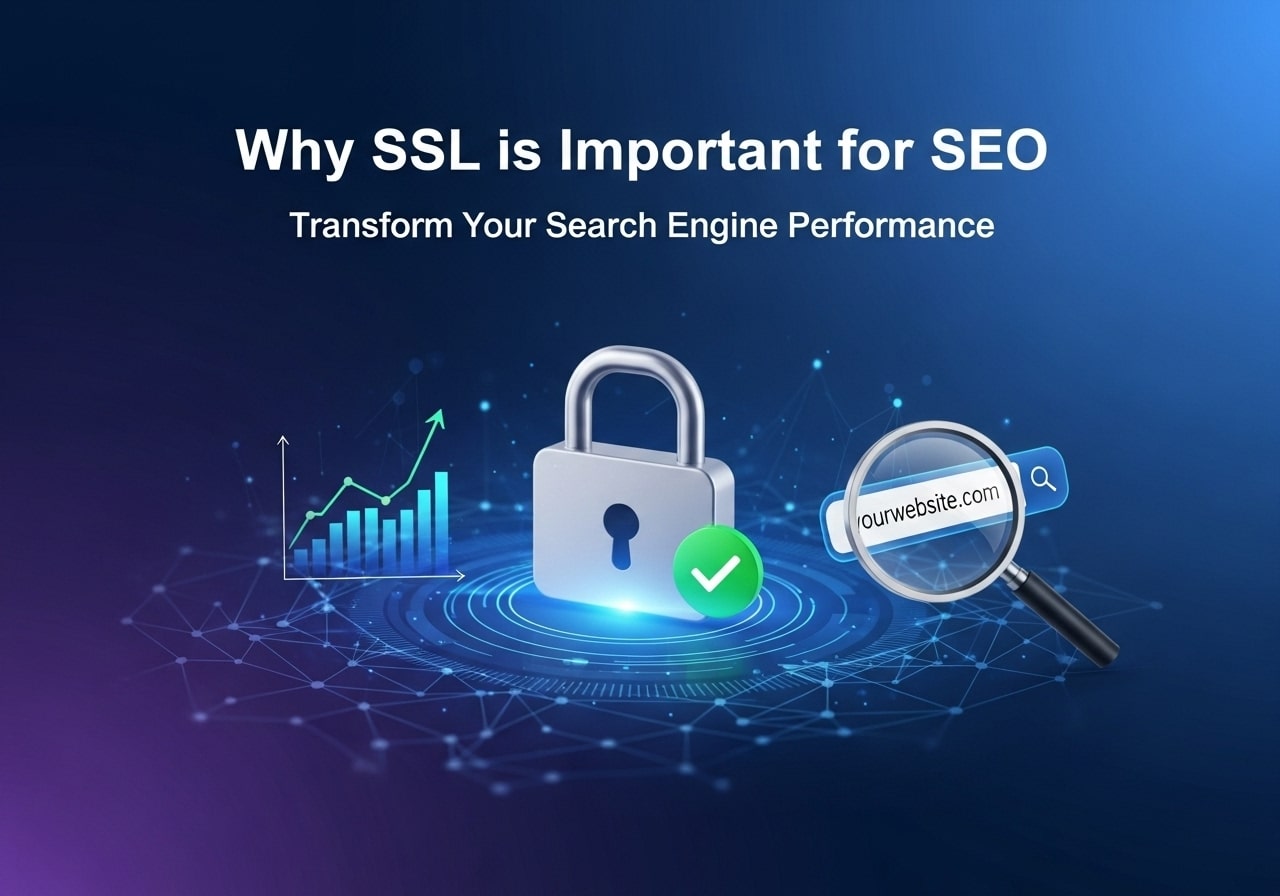
If you’ve ever wondered why SSL is important for SEO, you’re asking the right question. SSL, which stands for Secure Sockets Layer, is a security technology that creates an encrypted connection between your website and visitors’ browsers. When you see that little padlock icon in your browser’s address bar, that’s SSL at work.
SSL certificate and SEO work hand in hand to create a better web experience. Think of SSL as a security guard for your website. It makes sure that any information shared between your site and visitors stays private and secure. This includes personal details, credit card numbers, passwords, and any other sensitive data.
But SSL isn’t just about security anymore. Search engines, especially Google, now use SSL as one of their ranking factors. This means websites with SSL certificates get a small boost in search results compared to those without them.
The process is simple: when someone visits your website, SSL encrypts all the data being sent back and forth. This encryption makes it nearly impossible for hackers to steal or tamper with the information. For visitors, they see “https://” at the beginning of your web address instead of just “http://”.
The Direct Connection Between SSL Certificate and SEO
Does SSL certificate affect SEO? The answer is absolutely yes, and here’s exactly how it works. Google first announced SSL as a ranking signal back in 2014, making it clear that secure websites would get preference in search results.
When Google crawls and indexes your website, it checks for various signals to determine how trustworthy and valuable your site is. SSL certificates serve as a trust signal that tells Google your website takes security seriously. This trust factor contributes to your overall domain authority and can improve your search engine rankings.
The relationship between SEO and SSL certificates goes beyond just rankings. SSL affects several important SEO metrics:
- Crawl efficiency: Search engine bots can crawl HTTPS sites more effectively
- Referral data: HTTPS sites preserve referral data better than HTTP sites
- Site speed: Modern SSL implementations can actually improve page load times
- Mobile optimization: SSL is especially important for mobile SEO performance
Search engines also use SSL as part of their quality assessment. Websites without SSL certificates are often flagged as “not secure” in browsers, which can hurt your credibility and user engagement metrics. Poor user engagement signals can negatively impact your SEO performance over time.
How Google Views SSL Certificates
Google has made its position crystal clear: SSL is an absolute must from SEO perspective. The search giant doesn’t just recommend SSL; it actively promotes secure websites and warns users about unsecured ones.
When Google’s algorithms evaluate websites, they look for trust signals that indicate a site is legitimate and safe for users. SSL certificates are one of the strongest trust signals available. Google sees SSL as evidence that website owners care about their visitors’ security and privacy.
Google Chrome, the world’s most popular web browser, now displays warning messages for websites without SSL certificates. These warnings appear when users try to enter information on unsecured sites, creating a poor user experience that can drive visitors away.
The search engine also uses SSL status in its mobile-first indexing approach. Since Google primarily uses the mobile version of websites for ranking purposes, having SSL protection becomes even more critical for maintaining good search performance.
Google’s stance on SSL has influenced other search engines too. Bing, Yahoo, and other search platforms have followed Google’s lead in favoring secure websites in their rankings.
Does SSL Certificate Affect SEO Rankings?
Does an SSL certificate affect SEO? Research and case studies consistently show that SSL certificates do impact search engine rankings. While SSL might be considered a “lightweight” ranking factor, its effects extend far beyond the direct ranking boost.
Multiple SEO studies have documented ranking improvements after websites switched from HTTP to HTTPS. These improvements typically range from small but noticeable bumps to significant increases in search visibility, depending on various factors like competition and industry.
The ranking benefits of SSL work in several ways:
Direct ranking boost: Google gives a small ranking preference to HTTPS sites over HTTP sites when all other factors are equal.
Improved user metrics: SSL certificates reduce bounce rates and increase user engagement, which are important ranking factors.
Better crawling: Search engines can crawl and index HTTPS sites more efficiently, leading to better visibility.
Trust and authority: SSL contributes to your website’s overall trustworthiness, which impacts domain authority.
However, it’s important to understand that SSL certificate impact on SEO isn’t just about rankings. The real power comes from the combination of direct ranking benefits and improved user experience metrics.
SSL Certificate Impact on SEO Performance
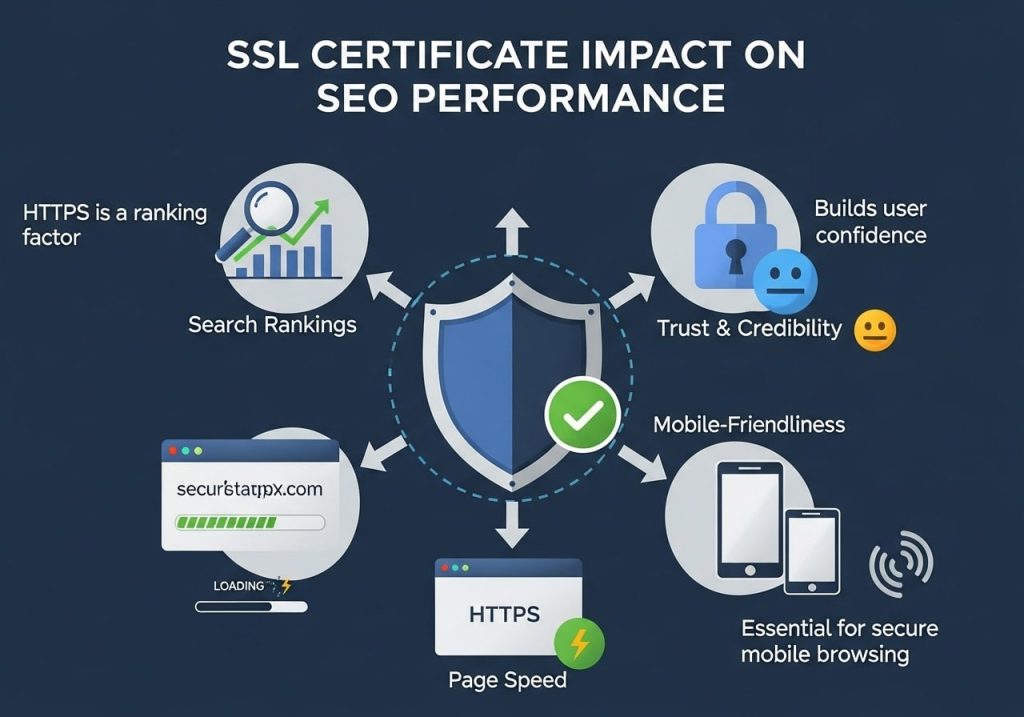
The SSL certificate impact on SEO extends across multiple performance areas that directly affect your website’s search engine success. Understanding these impacts helps you make informed decisions about your website’s security and optimization strategy.
Page Speed and Performance: Modern SSL implementations using TLS 1.3 can actually improve your website’s loading speed. This happens because newer SSL protocols are more efficient and can reduce the number of round trips needed to establish secure connections. Since page speed is a confirmed Google ranking factor, SSL can indirectly boost your SEO through improved performance.
User Trust and Engagement: Websites with SSL certificates experience better user engagement metrics. Visitors are more likely to stay longer, browse more pages, and complete desired actions on secure websites. These positive user signals tell search engines that your website provides value, which can improve rankings over time.
Referral Data Preservation: When traffic moves from an HTTPS site to an HTTP site, referral data is often lost and shows up as “direct” traffic in analytics. By implementing SSL, you preserve valuable referral information that helps you understand your traffic sources and optimize your SEO strategy accordingly.
Mobile SEO Benefits: Google’s mobile-first indexing approach means your mobile site version is what gets ranked. SSL is particularly important for mobile users who often access websites over less secure networks. Mobile users also tend to be more security-conscious, making SSL essential for mobile SEO success.
User Experience Benefits of SSL for SEO
Does SSL help SEO through improved user experience? The answer is definitely yes. User experience has become increasingly important for SEO success, and SSL plays a crucial role in creating positive user experiences.
When visitors see the padlock icon and “https://” in their browser, they feel more confident about interacting with your website. This confidence translates into measurable improvements in user behavior:
Reduced Bounce Rates: Secure websites typically see lower bounce rates because users feel safer staying and exploring the site. Lower bounce rates signal to search engines that your content is valuable and engaging.
Higher Conversion Rates: SSL certificates can significantly improve conversion rates, especially for e-commerce sites or any website that collects user information. Better conversions often correlate with better search performance.
Increased Time on Site: Users tend to spend more time on secure websites, browsing more pages and engaging with more content. These engagement metrics are important ranking factors that can boost your SEO performance.
Better Mobile Experience: Mobile users are particularly security-conscious, and SSL certificates create a better mobile browsing experience. Since mobile optimization is crucial for modern SEO, SSL becomes even more important.
Browser warnings about unsecured sites can instantly destroy user trust and send visitors away from your website. These negative user signals can hurt your search engine rankings over time.
Does SSL Help SEO for Local Businesses?
Is SSL necessary for improving local SEO? For local businesses, SSL certificates are especially important because they directly impact trust and credibility factors that are crucial for local search success.
Local businesses rely heavily on customer trust and reputation. When potential customers search for local services, they want to feel confident about the businesses they’re considering. SSL certificates provide that confidence by showing that a business takes security seriously.
Google My Business and local search rankings consider various trust signals when determining which businesses to show in local results. SSL certificates contribute to your overall trust profile and can help improve your local search visibility.
Local businesses that collect customer information through contact forms, appointment bookings, or online orders absolutely need SSL certificates. Without SSL, browsers will warn users that the site is not secure, which can drive away potential customers and hurt local SEO performance.
Local SEO Benefits of SSL:
- Improved Google My Business profile strength
- Better local citation trust signals
- Increased customer confidence in local searches
- Higher conversion rates from local traffic
- Better mobile local search performance
- Improved reviews and customer feedback
Many local businesses also benefit from the credibility boost that SSL provides. When customers see that a local business has invested in website security, it reflects positively on the business’s professionalism and attention to detail.
Technical SEO Advantages of SSL Implementation
From a technical SEO standpoint, SEO and SSL integration provides several important advantages that can improve your website’s search engine performance.
HTTP/2 Support: SSL certificates enable HTTP/2, a newer web protocol that significantly improves website loading speeds. HTTP/2 allows for better compression, multiplexing, and server push capabilities that can make your website faster and more efficient.
Better Crawling and Indexing: Search engine crawlers can more effectively crawl HTTPS websites. This improved crawling can lead to better indexing of your content and faster discovery of new pages and updates.
Canonical URL Standardization: Implementing SSL helps establish a clear canonical URL structure for your website. This prevents duplicate content issues that can arise when both HTTP and HTTPS versions of your site are accessible.
Improved Analytics Data: HTTPS websites provide cleaner, more accurate analytics data. This improved data quality helps you make better SEO decisions based on reliable traffic and user behavior information.
Future-Proofing: As web security standards continue to evolve, having SSL ensures your website stays compatible with new technologies and search engine requirements.
API and Third-Party Integrations: Many modern web services and APIs require SSL connections. Having SSL certificates ensures your website can integrate with the latest tools and services that might benefit your SEO efforts.
Common SSL Mistakes That Hurt SEO
While implementing SSL is important, doing it incorrectly can actually hurt your SEO performance. Here are the most common SEO SSL certificate mistakes to avoid:
Mixed Content Issues: This happens when your HTTPS site loads some resources (images, scripts, stylesheets) over HTTP. Mixed content can cause security warnings and prevent your SSL certificate from working properly, which can negatively impact both user experience and SEO.
Incorrect Redirects: Failing to set up proper 301 redirects from HTTP to HTTPS versions of your pages can result in duplicate content issues and loss of link equity. This can significantly hurt your search engine rankings.
Broken Internal Links: After switching to HTTPS, internal links that still point to HTTP versions of pages can cause problems. These links may not pass full link equity and can create crawling inefficiencies.
Forgetting About Canonical Tags: Not updating canonical tags to point to HTTPS versions can confuse search engines about which version of your pages should be indexed.
SSL Certificate Expiration: Letting SSL certificates expire can cause serious SEO problems, including security warnings that drive users away and potential ranking penalties.
Incomplete Migration: Some website owners only secure their homepage or main pages while leaving other pages unsecured. This incomplete approach can hurt overall SEO performance.
Not Updating XML Sitemaps: Failing to update your XML sitemap to include HTTPS URLs can slow down the indexing process and reduce SEO effectiveness.
How to Implement SSL for Maximum SEO Benefit
To get the maximum seo ssl certificate benefits, follow these step-by-step implementation guidelines:
- Choose the Right SSL Certificate Type:
- Domain Validated (DV) certificates work for most websites
- Organization Validated (OV) certificates provide additional trust signals
- Extended Validation (EV) certificates offer the highest level of trust but may be overkill for smaller sites
- Plan Your Migration Strategy:
- Audit your current website for all HTTP resources
- Create a comprehensive list of pages that need updating
- Plan the migration during low-traffic periods to minimize disruption
- Set Up Proper Redirects:
- Implement 301 redirects from all HTTP pages to their HTTPS equivalents
- Test redirects thoroughly to ensure they work correctly
- Update any hardcoded HTTP links in your content
- Update Your Website Configuration:
- Change all internal links to use HTTPS
- Update canonical tags to point to HTTPS versions
- Modify your XML sitemap to include HTTPS URLs
- Update your robots.txt file if necessary
- Configure Search Console and Analytics:
- Add your HTTPS site as a new property in Google Search Console
- Set up proper tracking in Google Analytics for the HTTPS version
- Monitor both versions during the transition period
- Test Everything Thoroughly:
- Use SSL testing tools to verify your certificate is working correctly
- Check for mixed content warnings
- Test website functionality across different browsers and devices
Measuring SSL’s Impact on Your SEO Performance
After implementing SSL, it’s important to track its impact on your SEO performance. Here are the key metrics to monitor:
- Search Engine Rankings: Track your keyword rankings before and after SSL implementation. While improvements may be gradual, you should see positive trends over time, especially for competitive keywords.
- Organic Traffic: Monitor your organic search traffic levels. SSL implementation often leads to improved traffic as rankings improve and user trust increases.
User Engagement Metrics:
- Bounce rate improvements
- Average session duration increases
- Pages per session improvements
- Conversion rate enhancements
Technical Performance:
- Page load speed improvements (especially with HTTP/2)
- Crawl error reductions in Search Console
- Indexing speed improvements for new content
Security and Trust Indicators:
- Reduced security warnings in browser data
- Improved user feedback and reviews
- Better performance in trust-related searches
Tools for Monitoring SSL SEO Impact:
- Google Search Console for technical issues and performance
- Google Analytics for user behavior and traffic analysis
- Page speed testing tools for performance monitoring
- SSL testing tools for certificate health checks
Remember that why SSL is important for SEO goes beyond just rankings. The combination of improved user trust, better technical performance, and search engine preference for secure sites creates a compound effect that can significantly benefit your overall online presence.
SSL certificates have evolved from being a nice-to-have security feature to an essential component of modern SEO strategy. The question is no longer whether you should implement SSL, but how quickly you can do it effectively. By understanding the connection between SSL and SEO, avoiding common implementation mistakes, and properly measuring the results, you can leverage SSL certificates to improve both your website security and search engine performance.
Take action today by auditing your current SSL status and planning your implementation or optimization strategy. Your users and search engines will thank you for prioritizing their security and trust.
FAQs
What is SSL and why do I need it for my website?
SSL (Secure Sockets Layer) is a security technology that creates an encrypted connection between your website and visitors’ browsers. You’ll know a site has SSL when you see “https://” and a padlock icon in the address bar. Google considers SSL a ranking factor, so having it helps your site perform better in search results while keeping your visitors’ data safe.
How does SSL actually help my website rank higher in Google?
Google officially announced SSL as a ranking signal back in 2014. While it’s not the most important factor, it gives your site a small boost over competitors who don’t have SSL. Plus, browsers now warn users when they visit non-SSL sites, which can hurt your credibility and cause people to leave quickly.
Will adding SSL to my existing website hurt my current search rankings?
If you set up SSL properly, it shouldn’t hurt your rankings. The key is doing a proper migration – updating all your internal links, setting up redirects from HTTP to HTTPS, and updating your Google Search Console and Analytics settings. Most sites see either no change or a slight improvement after switching to SSL.
What happens if I don’t have SSL on my website?
Without SSL, browsers will show a “Not Secure” warning to your visitors, which can make them leave immediately. Your site may also rank lower than SSL-enabled competitors. Plus, you’re missing out on certain web features that only work with HTTPS, and some browsers are getting stricter about blocking non-secure content.
How long does it take to see SEO improvements after adding SSL?
You might see some changes within a few weeks, but it usually takes 2-3 months to see the full impact. The timeline depends on how often Google crawls your site and how well you handle the technical migration. Keep in mind that SSL is just one piece of the SEO puzzle, so don’t expect dramatic changes from this alone.
Does SSL help with website loading speed, and does that affect SEO?
SSL itself doesn’t make your site faster, but the modern version (HTTP/2) that works with HTTPS can actually speed things up. Since page speed is a ranking factor, this creates an indirect SEO benefit. However, a poorly configured SSL setup can slow things down, so it’s important to get it implemented correctly.
Do I need different types of SSL certificates for better SEO results?
For SEO purposes, the type of SSL certificate doesn’t matter much. A basic Domain Validated (DV) certificate works just as well as more expensive options. Google cares that you have SSL encryption, not which specific certificate you use. Choose based on your security needs and budget, not SEO benefits.
Can SSL help reduce my website’s bounce rate?
Yes, definitely. When people see the “Not Secure” warning on non-SSL sites, many leave right away, which increases your bounce rate. SSL removes this warning and makes visitors feel safer, especially if they’re entering personal information or making purchases. Lower bounce rates can indirectly help your SEO.
What should I do if my SSL certificate expires?
Keep track of your SSL certificate’s expiration date and renew it before it expires. Many hosting providers offer auto-renewal services. If your certificate does expire, browsers will show scary warning messages to visitors, and search engines may start treating your site as less trustworthy, which could hurt your rankings.
Are there any common SSL mistakes that could hurt my SEO?
The biggest mistakes are mixed content issues (having some HTTP elements on HTTPS pages), forgetting to redirect HTTP to HTTPS, and not updating your sitemap and internal links. Also, make sure to update your Google Search Console property to the HTTPS version and check that your canonical tags point to the HTTPS versions of your pages.