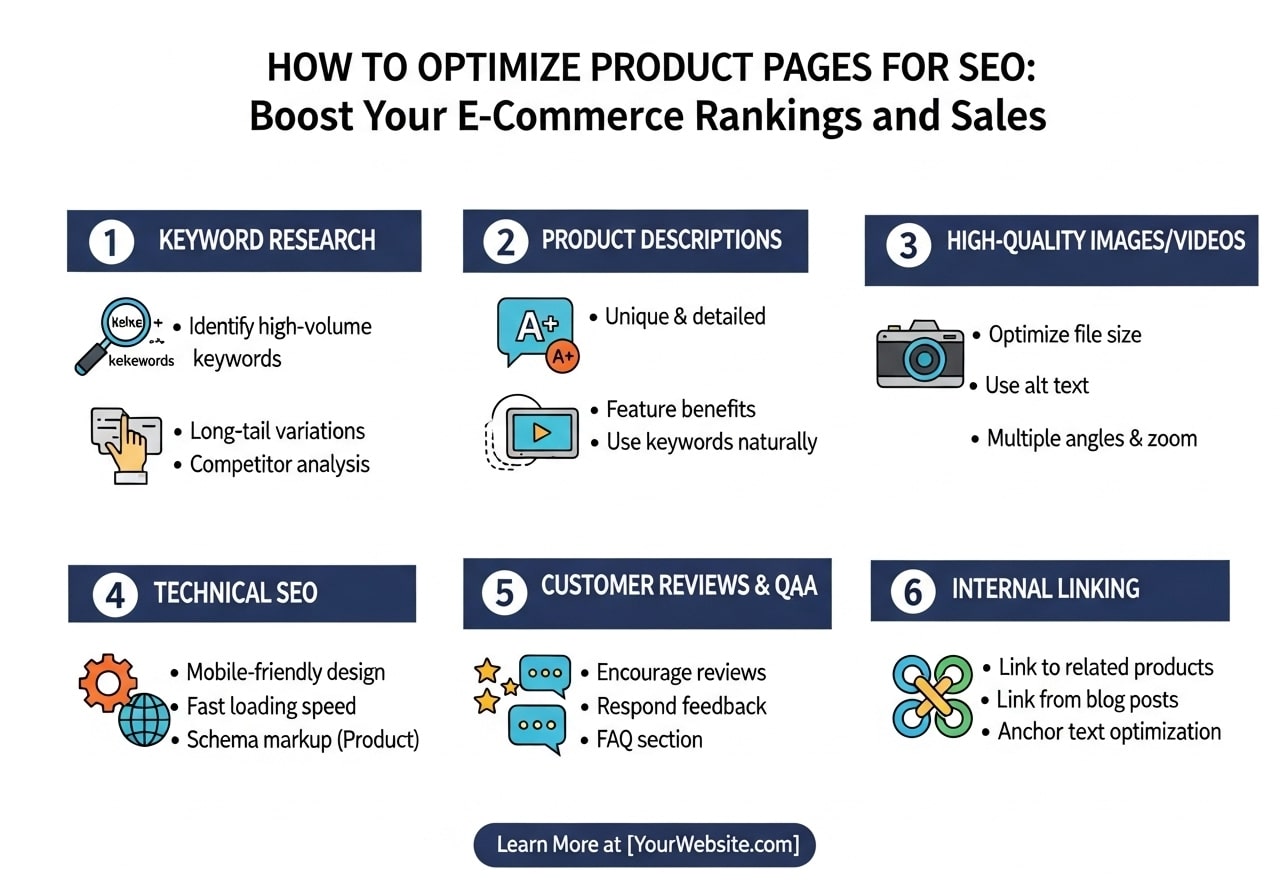
How to optimize product pages for SEO is one of the most important skills for any e-commerce business owner. When you understand how to optimize product pages for seo e-commerce, you can dramatically increase your organic traffic, improve search rankings, and boost sales without spending more on advertising.
Product page SEO isn’t just about stuffing keywords into your content. It’s about creating a complete strategy that helps search engines understand what you’re selling while providing an excellent experience for your customers. Whether you’re running a small online store or managing thousands of products, these proven techniques will help you compete with larger retailers and capture more market share.
Boost Your Sales with Product Page SEO Basics
What is Product Page Optimization?
Product page optimization is the process of improving your individual product pages to rank higher in search results and convert more visitors into customers. This involves optimizing everything from your page titles and descriptions to your product images and internal linking structure.
When you know how to optimize ecommerce product pages for seo, you’re essentially making it easier for potential customers to find your products when they search for them online. This is especially important because product pages often have the highest commercial intent, meaning people viewing them are more likely to make a purchase.
Why Product Page SEO Matters
Search engines drive a significant portion of e-commerce traffic. When you optimize product pages properly, you can:
- Increase organic visibility for high-intent keywords
- Reduce dependence on paid advertising
- Build long-term sustainable traffic
- Improve user experience and conversion rates
- Compete more effectively against larger competitors
Studies show that e-commerce sites get about 35% of their traffic from organic search, making SEO optimization for ecommerce a critical investment for long-term success.
Essential On-Page SEO Elements for Product Pages
Crafting Perfect Product Titles
Your product title is the most important on-page element for SEO. It should include your primary keyword while clearly describing what you’re selling. Here are the best practices for product page titles:
Include Key Information:
- Primary keyword (product type)
- Brand name when relevant
- Key specifications or features
- Model numbers for specific products
Title Structure Examples:
- “Women’s Running Shoes – Nike Air Max 270 Black Size 8”
- “Organic Coffee Beans – Colombian Dark Roast 2lb Bag”
- “Wireless Bluetooth Headphones – Sony WH-1000XM4 Noise Cancelling”
Keep titles between 50-60 characters to ensure they display fully in search results. This helps with both SEO and click-through rates.
Writing Compelling Meta Descriptions
Meta descriptions don’t directly impact rankings, but they significantly affect click-through rates. A good meta description for product pages should:
- Include your primary keyword naturally
- Highlight key benefits or features
- Create urgency or appeal
- Stay within 150-160 characters
- Include pricing when competitive
Example Meta Description:
“Shop the Nike Air Max 270 women’s running shoes in black. Comfortable, lightweight design with superior cushioning. Free shipping on orders over $75. Order now!”
Optimizing Product URLs
Clean, descriptive URLs help both search engines and users understand what your page is about. Follow these guidelines for product URLs:
- Keep URLs short and descriptive
- Include primary keywords
- Use hyphens to separate words
- Avoid unnecessary parameters
- Follow a consistent structure
Good URL Examples:
- yourstore.com/womens-running-shoes/nike-air-max-270-black
- yourstore.com/coffee/colombian-dark-roast-beans
- yourstore.com/headphones/sony-wh1000xm4-wireless
Product Content Optimization Strategies
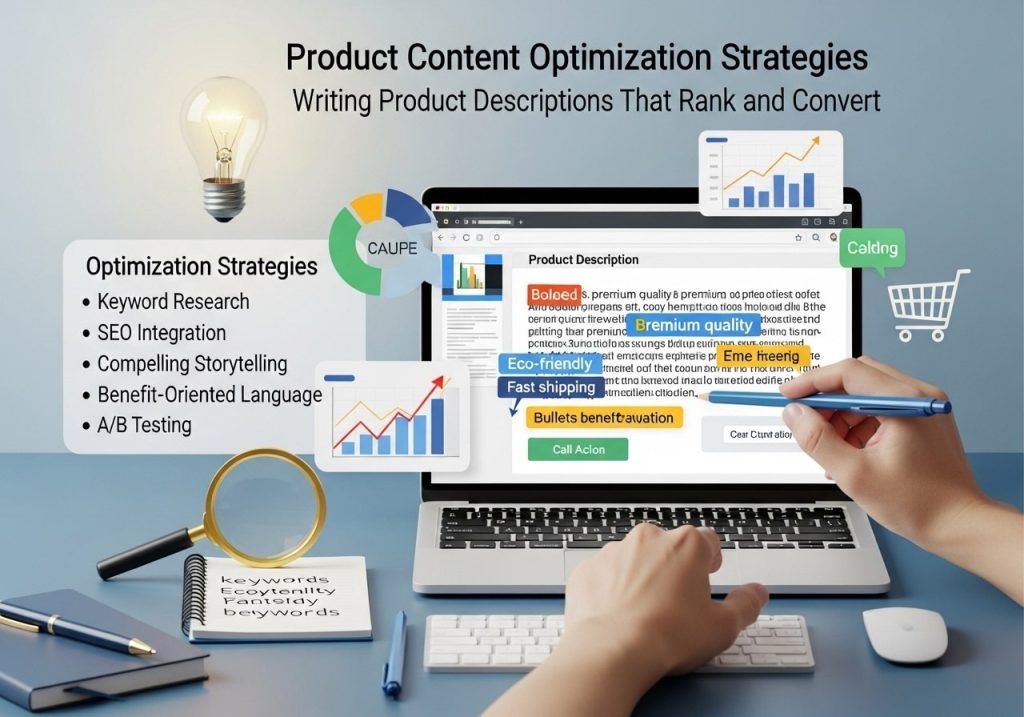
Writing Product Descriptions That Rank and Convert
Learning how to optimize product pages means creating descriptions that serve both search engines and customers. Your product descriptions should be comprehensive yet scannable, informative yet persuasive.
Structure Your Descriptions:
- Opening paragraph: Include primary keyword and key benefits
- Feature list: Use bullet points for easy scanning
- Detailed specifications: Include searchable technical details
- Usage scenarios: Help customers visualize using the product
- Call-to-action: Guide users toward purchase
SEO Best Practices for Product Descriptions:
- Include primary and related keywords naturally
- Write unique descriptions for each product
- Use semantic keywords (related terms)
- Include questions customers might ask
- Optimize for featured snippets with clear answers
Using Headers and Formatting
Proper heading structure helps search engines understand your content hierarchy. Use H1 tags for product names and H2/H3 tags for sections like features, specifications, and reviews.
Example Header Structure:
- H1: Nike Air Max 270 Women’s Running Shoes
- H2: Key Features
- H3: Comfort Technology
- H3: Design Elements
- H2: Product Specifications
- H2: Customer Reviews
- H2: Size Guide
Implementing Schema Markup
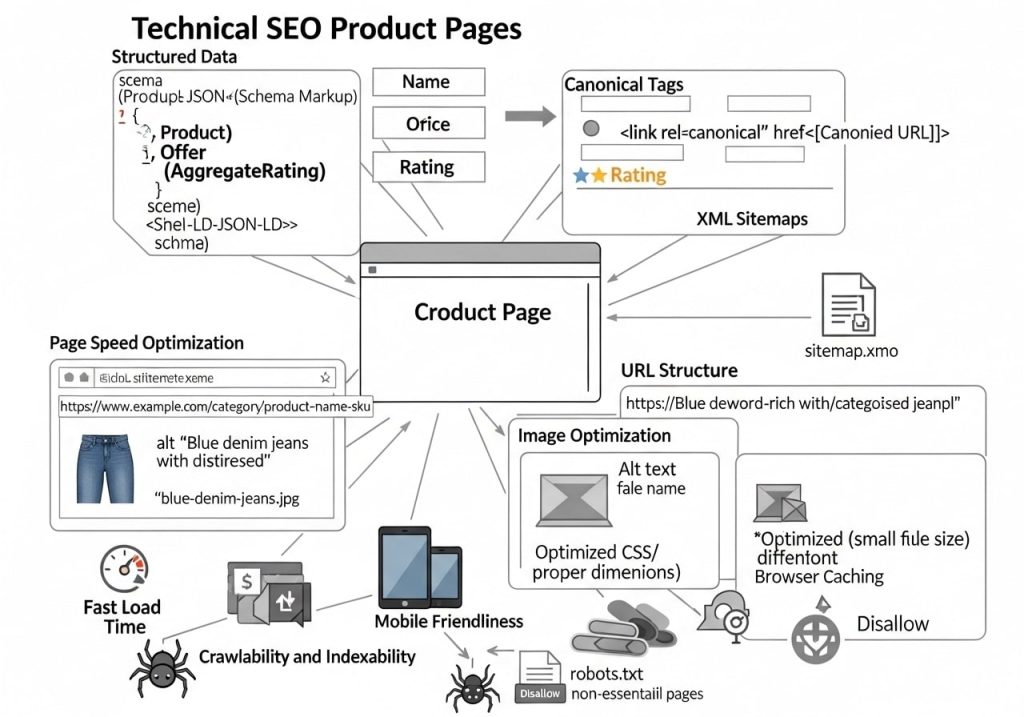
Product schema markup helps search engines understand your product information and can lead to rich snippets in search results. Essential schema elements include:
- Product name and description
- Price and currency
- Availability status
- Brand information
- Customer ratings and reviews
- SKU and model numbers
Rich snippets can significantly improve click-through rates by showing product information directly in search results, including prices, ratings, and availability.
Technical SEO for E-Commerce Product Pages
Page Speed Optimization
Fast-loading pages are crucial for both SEO and user experience. Product pages often have multiple images and complex layouts, so optimization is essential:
Image Optimization:
- Compress images without losing quality
- Use WebP format when possible
- Implement lazy loading
- Optimize alt text for SEO
Code Optimization:
- Minimize CSS and JavaScript
- Use browser caching
- Enable compression
- Optimize server response times
Mobile Optimization
With mobile commerce growing rapidly, mobile optimization is no longer optional. Ensure your product pages:
- Load quickly on mobile devices
- Have thumb-friendly navigation
- Display product images clearly
- Make purchasing easy on small screens
- Use responsive design principles
Internal Linking Strategy
Strategic internal linking helps distribute page authority and improves user experience. On product pages, link to:
- Related products
- Category pages
- Size guides and help content
- Recently viewed items
- Complementary products
Use descriptive anchor text that includes relevant keywords when linking between pages.
Platform-Specific Optimization
How to Optimize Shopify Product Pages for SEO
Shopify is one of the most popular e-commerce platforms, and learning how to optimize shopify product pages for seo requires understanding the platform’s specific features:
Shopify SEO Essentials:
- Use Shopify’s built-in SEO fields for titles and descriptions
- Customize URL handles for better keyword targeting
- Optimize collection pages for category keywords
- Use Shopify apps for advanced SEO features
- Implement structured data through themes or apps
How to Optimize Product Page Shopify Specific Tips:
- Take advantage of Shopify’s automatic sitemap generation
- Use the platform’s image alt text features
- Optimize for Shopify’s search functionality
- Implement customer reviews for social proof and content
How to Optimize WooCommerce Product Pages for SEO
WooCommerce offers more flexibility for SEO optimization. Here’s how to optimize woocommerce product pages for seo:
WooCommerce SEO Advantages:
- Full control over site structure and code
- Access to powerful SEO plugins like Yoast
- Flexible schema markup implementation
- Custom URL structures
- Advanced internal linking options
Essential WooCommerce Optimizations:
- Install and configure SEO plugins properly
- Optimize product categories and tags
- Use custom fields for additional product information
- Implement breadcrumbs for better navigation
- Optimize checkout and cart pages for conversions
Image and Media Optimization
How to Optimize Images for SEO
Images are crucial for e-commerce success, and knowing how to optimize images for seo can improve both rankings and user experience:
Image SEO Best Practices:
- Use descriptive, keyword-rich file names
- Write detailed alt text describing the image
- Choose appropriate image formats (WebP, JPEG, PNG)
- Compress images to reduce file size
- Use multiple angles and zoom functionality
Alt Text Examples:
- Poor: “image1.jpg” alt=”product image”
- Good: “nike-air-max-270-black-womens-running-shoe-side-view.jpg” alt=”Nike Air Max 270 women’s running shoe in black, side view showing breathable mesh upper”
Video Content Optimization
Product videos can significantly improve engagement and conversions. Optimize videos by:
- Including transcripts for accessibility and SEO
- Using descriptive titles and descriptions
- Optimizing video thumbnails
- Implementing video schema markup
- Hosting videos on fast, reliable platforms
Category Page Optimization
How to Optimize Product Category Pages for SEO
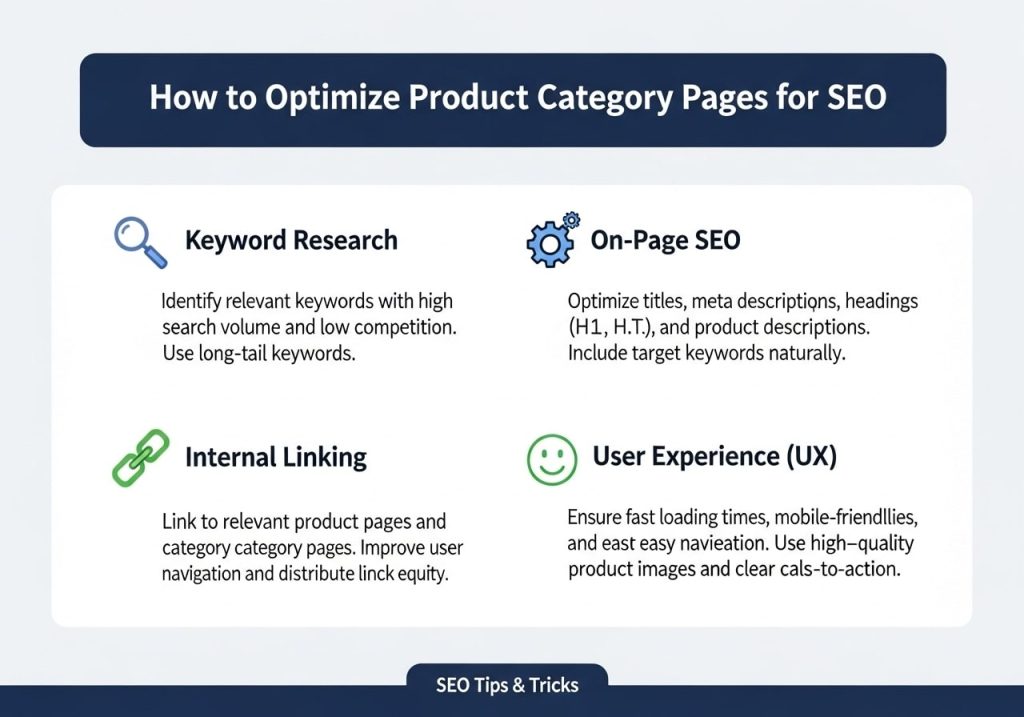
Learning how to optimize product category pages for seo is essential for capturing broader, high-volume keywords:
Category Page Elements:
- Create unique, descriptive category descriptions
- Use faceted navigation carefully to avoid duplicate content
- Implement pagination properly
- Include category-specific keywords naturally
- Add helpful filtering and sorting options
Category Content Strategy:
- Write informative category introductions
- Include buyer’s guides and comparison content
- Feature popular products prominently
- Use internal linking to connect related categories
- Implement breadcrumb navigation
Managing Large Product Catalogs
For stores with thousands of products, organization becomes crucial:
- Create logical category hierarchies
- Use consistent naming conventions
- Implement tag systems for better organization
- Create landing pages for popular search terms
- Use automation tools to maintain consistency
Common Mistakes to Avoid
Duplicate Content Issues
E-commerce sites often struggle with duplicate content from:
- Manufacturer product descriptions
- Similar products with slight variations
- Multiple URLs for the same product
- Pagination and filtering systems
Solutions:
- Write unique descriptions for all products
- Use canonical tags appropriately
- Implement proper URL parameters handling
- Create variation-specific content when needed
Keyword Stuffing
Avoid overusing keywords in your content. Instead:
- Focus on natural, helpful language
- Use semantic keywords and synonyms
- Write primarily for users, not search engines
- Include keywords in strategic locations
Technical Issues
Common technical problems include:
- Slow loading speeds
- Mobile usability issues
- Broken internal links
- Missing or poor schema markup
- Inadequate site search functionality
Measuring Success and Monitoring
Key Metrics to Track
Monitor these metrics to measure your product page SEO success:
SEO Metrics:
- Organic traffic to product pages
- Keyword rankings for target terms
- Click-through rates from search results
- Pages indexed by search engines
- Backlinks to product pages
Business Metrics:
- Conversion rates from organic traffic
- Revenue from organic search
- Average order value from SEO traffic
- Customer lifetime value
- Return on SEO investment
Tools for Monitoring
Use these tools to track your progress:
- Google Analytics for traffic and behavior data
- Google Search Console for search performance
- SEO tools like SEMrush or Ahrefs for keyword tracking
- Page speed tools like Google PageSpeed Insights
- Heat mapping tools for user behavior analysis
Advanced Product Page SEO Techniques
Seasonal and Trending Optimization
Stay competitive by:
- Updating content for seasonal trends
- Creating holiday-specific product collections
- Optimizing for trending keywords
- Adjusting inventory-based messaging
- Creating timely promotional content
User-Generated Content
Encourage customer reviews and photos because they:
- Provide fresh, unique content
- Include natural keyword variations
- Improve conversion rates
- Build trust with potential customers
- Create social proof
International SEO Considerations
For global e-commerce:
- Implement proper hreflang tags
- Create localized content
- Consider local search behavior
- Optimize for local currencies and shipping
- Understand cultural differences in product descriptions
Conclusion
Learning how to optimize product pages for SEO is an ongoing process that requires attention to both technical details and user experience. By implementing these product page seo best practices, you can improve your search rankings, attract more qualified traffic, and increase your e-commerce sales.
Remember that seo product page optimization isn’t a one-time task. Search engines regularly update their algorithms, customer behavior evolves, and competition increases. Stay current with SEO best practices, regularly audit your product pages, and continuously test and improve your approach.
The key to successful product page optimization lies in balancing SEO requirements with user needs. When you create pages that both search engines and customers love, you’ll see improvements in rankings, traffic, and most importantly, sales.
Start implementing these strategies today, beginning with your most important products, and gradually expand your optimization efforts across your entire catalog. With patience and consistent effort, you’ll build a strong foundation for long-term e-commerce success.
Ready to get started? Begin by auditing your current product pages, identifying optimization opportunities, and creating a systematic improvement plan. Your future self will thank you for the investment in proper product page SEO.
FAQs
hat does product page SEO mean?
Product page SEO is about making your online store’s product pages more visible on Google and other search engines. When someone searches for items you sell, good SEO helps your product pages show up higher in the search results, bringing more people to your store.
Why should I care about optimizing my product pages?
Better product page SEO brings more visitors to your store without paying for ads. When your pages rank higher on Google, more people find your products naturally, which usually leads to more sales and higher profits for your business.
What are the most important SEO elements for product pages?
The key elements include your product title, description, images with proper names, customer reviews, page loading speed, and making sure your site works well on phones. Each of these parts helps search engines understand and rank your products better.
How do I write product titles that work well for SEO?
Write clear, descriptive titles that include the main words people search for. For example, instead of “Blue Shirt,” use “Men’s Navy Blue Cotton Button-Down Shirt – Size Large.” Include the brand, color, material, and key features that customers actually search for.
What makes a good product description for SEO?
A good product description explains what the item is, how it helps the customer, and includes words people type into search engines. Write for real people first, not just search engines. Include details like size, materials, uses, and benefits in natural, easy-to-read language.
How important are product images for SEO?
Product images are really important for SEO. Use clear, high-quality photos and give them descriptive file names like “red-leather-handbag.jpg” instead of “IMG001.jpg.” Add alt text that describes what’s in the image to help search engines understand your pictures.
Do customer reviews help with SEO?
Yes, customer reviews help a lot with SEO. They add fresh, unique content to your pages and often include words that other customers search for. Reviews also build trust, which can lead to better click-through rates and higher search rankings.
How fast should my product pages load?
Your product pages should load in 3 seconds or less. Slow pages hurt your search rankings and make customers leave before buying. You can speed up pages by compressing images, choosing a good web host, and removing unnecessary plugins or code.
What’s the difference between optimizing for desktop vs mobile?
Mobile optimization means your product pages work perfectly on phones and tablets. Since most people shop on mobile devices now, Google ranks mobile-friendly sites higher. Make sure buttons are easy to tap, text is readable, and pages load quickly on all devices.
How long does it take to see results from product page SEO?
You can usually see some improvements in 2-6 months, but SEO is a long-term strategy. Some changes, like fixing page speed, might show results sooner. Building strong SEO takes time and consistent effort, but the results tend to last longer than paid advertising.