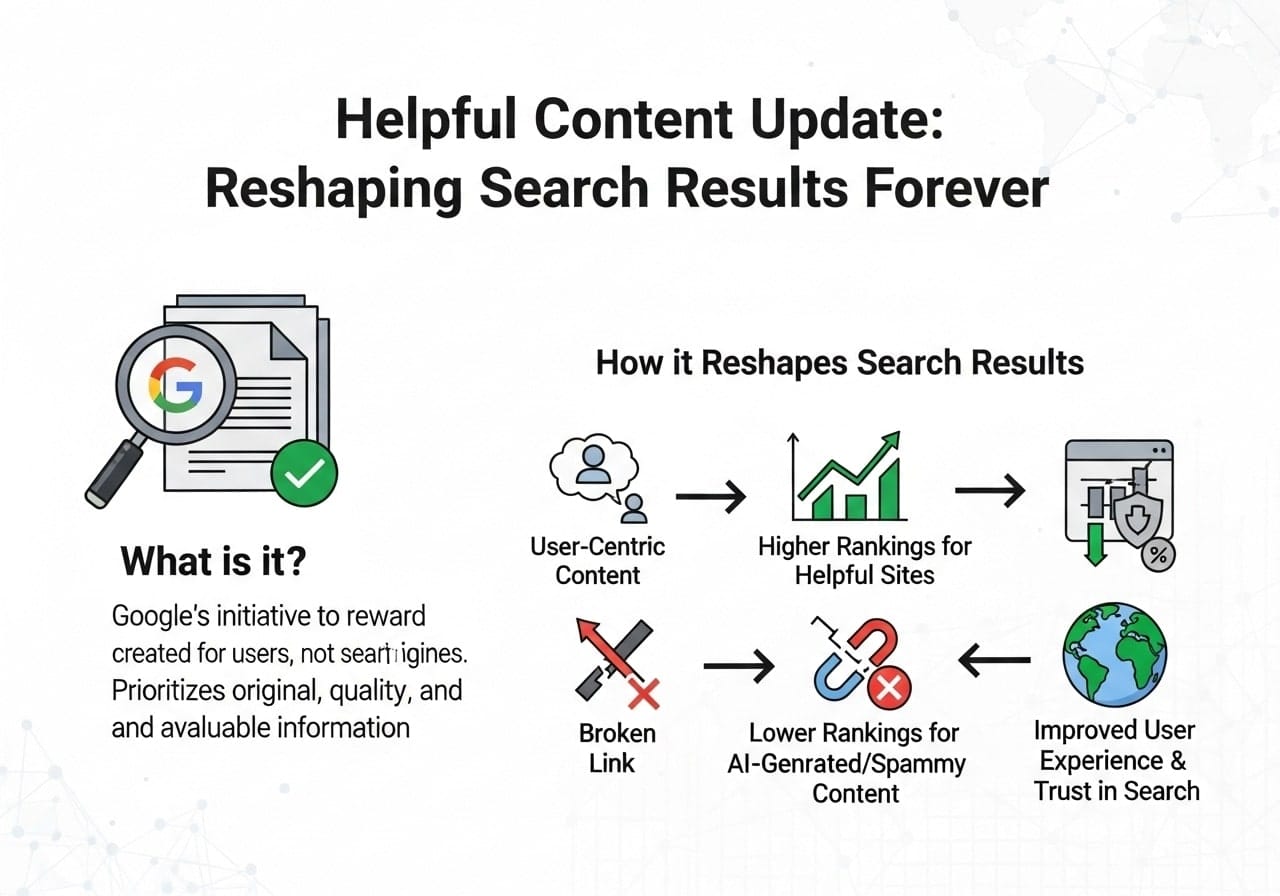
If you’ve noticed changes in your website’s search rankings lately, you might be wondering what is helpful content update and how it affects your online presence. Google’s helpful content update represents one of the most significant shifts in how search engines evaluate and rank websites. This google helpful content update has fundamentally changed the way we think about creating content for the web, moving beyond traditional SEO tactics to focus on genuine value for users.
Understanding Google’s Helpful Content Update
What is google helpful content update? Simply put, it’s a major algorithm change that Google introduced to reward websites that create content primarily for people, not search engines. This update specifically targets content that seems to exist mainly to rank well in search results rather than to help or inform users.
The google helpful content update guidelines focus on identifying content that feels like it was written by people, for people. Google wants to see content that demonstrates real experience, expertise, and genuine effort to help users find what they’re looking for.
Key Features of the Update
The helpful content update works as a site-wide signal, meaning it can affect your entire website’s performance, not just individual pages. Here’s what makes this google algorithm update different:
- Site-wide impact: Poor content on one part of your site can hurt rankings across your entire domain
- Machine learning based: The system uses AI to identify patterns in helpful versus unhelpful content
- Continuous evaluation: Unlike some updates that run once, this system constantly evaluates content quality
- Focus on user satisfaction: The algorithm tries to predict whether users will find content satisfying and useful
When Was the Google Helpful Content Update Released?
When was the Google Helpful Content update? Google first announced and began rolling out this update in August 2022. The initial rollout took about two weeks to complete. However, this wasn’t a one-time event. Google has continued to refine and update this system multiple times since then.
The timeline of major google core updates related to helpful content includes:
- August 2022: Initial helpful content update rollout
- December 2022: Helpful content update refinements
- September 2023: Another round of improvements
- March 2024: Integration into core ranking systems
What is the Helpful Content Update Impact on Websites?
What is the helpful content update impact on real websites? The effects have been significant and varied across different types of sites:
Websites That Saw Improvements
- Sites with original research and unique insights
- Websites created by subject matter experts
- Platforms with strong user engagement and return visitors
- Content that clearly demonstrates first-hand experience
Websites That Were Negatively Affected
- Sites with large amounts of AI-generated content without human oversight
- Websites created primarily for affiliate marketing without adding value
- Content farms producing high volumes of low-quality articles
- Sites copying or slightly modifying content from other sources
Measuring the Impact
Website owners reported various changes after the update:
- Traffic changes: Some sites saw 20-90% drops in organic traffic
- Ranking shifts: Even well-established sites experienced significant position changes
- Recovery patterns: Sites that made genuine improvements saw gradual recovery over 2-4 months
- Long-term effects: The impact has proven to be lasting, not just a temporary fluctuation
Google Helpful Content Update Guidelines
Understanding google helpful content update guidelines is essential for creating content that performs well. Google has provided clear guidance on what they consider helpful content:
Content Creation Best Practices
Google eeat guidelines for content writing emphasize these key areas:
- Experience: Does your content demonstrate that you’ve actually used, visited, or experienced what you’re writing about?
- Expertise: Do you have the knowledge and skills needed to write authoritatively on this topic?
- Authoritativeness: Is your website recognized as a go-to source for information in your field?
- Trustworthiness: Can users trust the information you provide? Is your site secure and transparent?
Content Quality Indicators
Google looks for these signs of helpful content:
- Clear purpose: Each piece of content should have a specific reason for existing
- Target audience focus: Content should be written for a specific group of people with specific needs
- Original insights: Adding your own perspective, research, or analysis
- Comprehensive coverage: Thoroughly addressing the topic from multiple angles
- Regular updates: Keeping information current and accurate
- User engagement: Content that keeps visitors on your site and encourages return visits
How E-E-A-T Google Standards Connect to Helpful Content
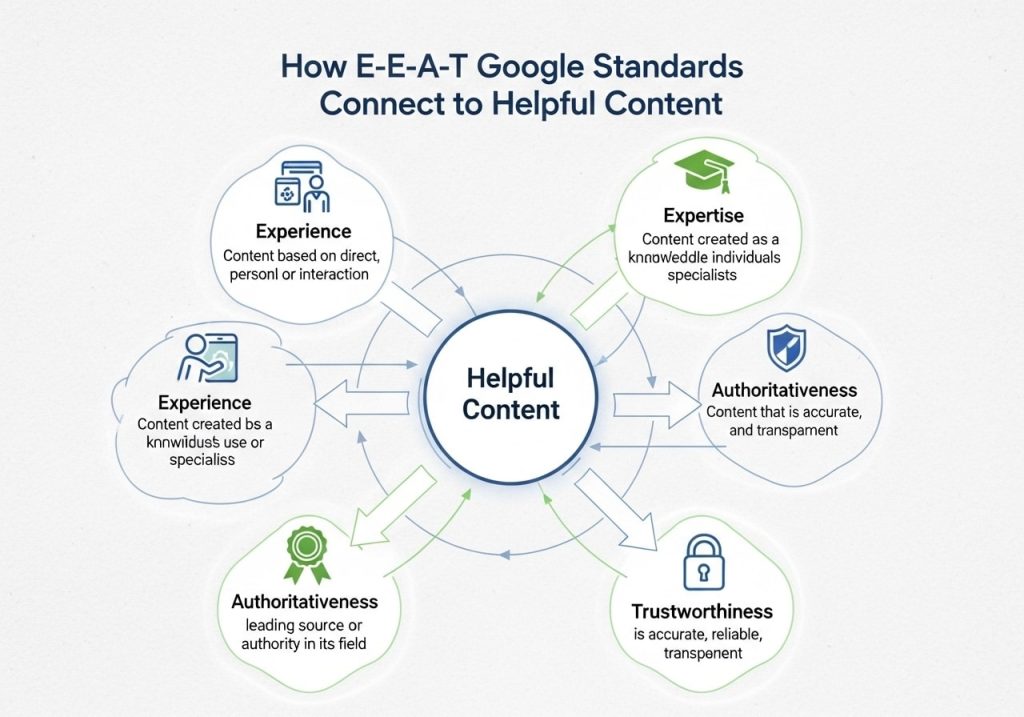
E-e-a-t google standards are deeply connected to the helpful content update. The google e-e-a-t guidelines provide a framework for understanding what Google considers quality content.
Experience in Practice
The addition of “Experience” to the traditional E-A-T framework reflects Google’s emphasis on first-hand knowledge. For example:
- A restaurant review written by someone who actually ate there
- A product review based on genuine use of the item
- Travel advice from someone who visited the destination
- Technical tutorials created by practitioners in the field
Building Expertise
Eeat google seo strategies should focus on:
- Demonstrating knowledge through detailed, accurate information
- Citing credible sources and research
- Showing understanding of nuanced aspects of topics
- Connecting related concepts and providing context
Establishing Authority
Authority comes from:
- Recognition by peers and industry experts
- Links and mentions from other authoritative sites
- Consistent publication of high-quality content over time
- Building a reputation in your specific niche
Creating Trust
Trustworthiness factors include:
- Transparent author information and credentials
- Clear contact information and business details
- Secure website infrastructure
- Accurate, fact-checked information
- Appropriate disclaimers and disclosures
Google Helpful Content Move to Core Ranking
In a significant development, google helpful content move to core ranking systems occurred in March 2024. This means the helpful content signals are now permanently integrated into Google’s main ranking algorithm rather than running as a separate system.
What This Change Means
The integration into core ranking systems has several implications:
- Continuous evaluation: The system now constantly evaluates content rather than running periodic updates
- Faster recovery: Sites that improve their content may see results more quickly
- Broader impact: The signals now influence more search results across more queries
- Permanent fixture: This is now a standard part of how Google ranks all content
Impact on SEO Strategy
This change requires a shift in how we think about seo google update news:
- Focus on long-term content quality rather than quick fixes
- Prioritize user satisfaction over traditional ranking factors
- Invest in creating genuinely useful content
- Monitor user engagement metrics more closely
How to Recover from a Google Helpful Content Update
How to recover from a Google helpful content update? Recovery requires a systematic approach to identifying and fixing content issues.
Step 1: Audit Your Content
Start with a comprehensive content audit:
- Identify low-performing pages: Use Google Analytics to find pages with high bounce rates or low engagement
- Review content purpose: Ask whether each piece of content serves a real user need
- Check for thin content: Look for pages with little substance or unique value
- Assess content freshness: Identify outdated or inaccurate information
Step 2: Evaluate Content Quality
For each piece of content, ask these questions:
- Does this content help users accomplish a specific goal?
- Would someone bookmark or share this content?
- Does this content demonstrate first-hand experience or expertise?
- Is this content better than what competitors offer?
- Would users be satisfied after reading this content?
Step 3: Identify Problem Areas
Common issues that need addressing:
- Duplicate or near-duplicate content across multiple pages
- Keyword stuffing or content written primarily for search engines
- Lack of original insights or just rehashing existing information
- Poor user experience with slow loading times or difficult navigation
- Missing author information or unclear content ownership
Google Helpful Content Update Recovery Strategies
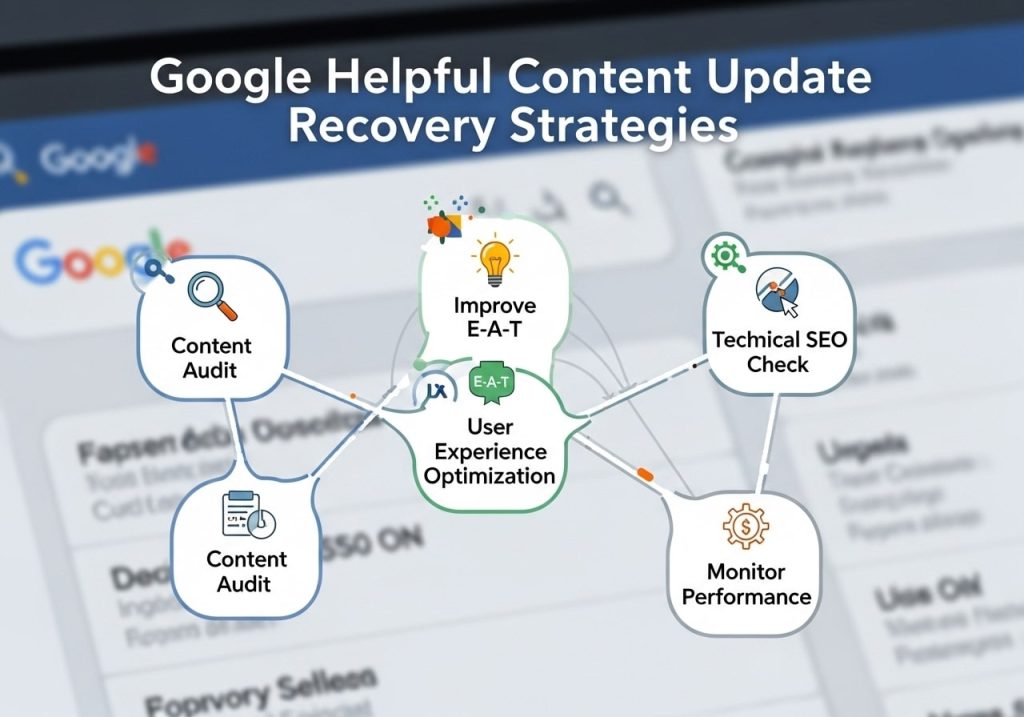
Google helpful content update recovery requires specific strategies tailored to the update’s requirements:
Content Improvement Strategies
- Add Personal Experience
- Include first-hand accounts and personal insights
- Share unique perspectives or case studies
- Add photos, videos, or other original media
- Document your process or methodology
- Enhance Content Depth
- Expand thin content with comprehensive information
- Add relevant subtopics and related information
- Include practical examples and actionable advice
- Address common questions and concerns
- Improve Content Structure
- Use clear headings and subheadings
- Add table of contents for long articles
- Include bullet points and numbered lists
- Create logical flow between sections
- Update and Maintain Content
- Regular review and update cycles
- Remove or consolidate outdated content
- Add publication and last updated dates
- Monitor for accuracy and relevance
Technical Improvements
Beyond content, consider these technical factors:
- Page speed optimization: Ensure fast loading times across all devices
- Mobile responsiveness: Optimize for mobile user experience
- Core Web Vitals: Meet Google’s page experience standards
- Site structure: Create clear navigation and internal linking
Author and Expertise Signals
Strengthen your expertise signals:
- Author bios: Include detailed information about content creators
- Credentials: Display relevant qualifications and experience
- Author pages: Create comprehensive profiles for content creators
- Bylines: Consistently attribute content to specific authors
How to Prepare for Google Updates
How to prepare for Google updates? The key is building a sustainable, user-focused content strategy that can weather algorithm changes.
Building Update-Resistant Content
Create content that focuses on:
- User value first: Always prioritize what users need over what search engines want
- Long-term relevance: Create content that remains useful over time
- Unique perspective: Offer insights that can’t be found elsewhere
- Comprehensive coverage: Thoroughly address topics from multiple angles
Monitoring and Measurement
Set up systems to track:
- Organic traffic trends: Monitor for sudden changes in search visibility
- User engagement metrics: Track bounce rate, time on page, and return visitors
- Search console data: Watch for changes in impressions, clicks, and positions
- Competitor performance: Understand how algorithm changes affect your industry
Staying Informed
Keep up with new seo google update information:
- Follow Google’s official communications and blog posts
- Monitor SEO news sources and industry publications
- Participate in SEO communities and forums
- Track your site’s performance consistently
Common Questions About Google Algorithm Updates
Will Google Remove Expired Content?
Will Google remove expired content? Google doesn’t automatically remove expired content, but outdated information can hurt your rankings. It’s important to:
- Regularly review and update time-sensitive content
- Remove or redirect truly obsolete pages
- Add update dates to show content freshness
- Archive old content that’s no longer relevant
What is Google Spam Update?
What is Google spam update? Google regularly releases spam updates targeting manipulative tactics:
- Link spam and paid link schemes
- Keyword stuffing and content manipulation
- Cloaking and deceptive practices
- Automatically generated spam content
How is This Affecting SEO?
How is effecting SEO? The helpful content update has fundamentally changed SEO priorities:
- Quality over quantity: Better to have fewer high-quality pages than many low-quality ones
- User focus: Success requires genuine focus on user needs and satisfaction
- Long-term thinking: Quick fixes and shortcuts are less effective
- Expertise matters: Demonstrating real knowledge and experience is crucial
Why Has Google Changed?
Why has Google changed? Several factors drive Google’s algorithm evolution:
- AI content proliferation: The rise of AI-generated content requires better quality detection
- User expectations: Search users expect more relevant, trustworthy results
- Information quality: Combat misinformation and low-quality content
- Competition: Maintain Google’s position as the most useful search engine
Conclusion
Understanding what is helpful content update is crucial for anyone serious about online success. This google algorithm update represents a fundamental shift toward rewarding content that genuinely helps users rather than content designed primarily to rank well in search results.
The key to thriving in this new environment is simple: create content that real people find genuinely useful. Focus on your expertise, share your experience, and always prioritize your audience’s needs over search engine optimization tricks.
Remember that google helpful content update recovery is possible, but it requires patience and genuine commitment to improvement. The sites that succeed are those that embrace the update’s core message: create helpful, reliable, people-first content.
Ready to improve your content strategy? Start by auditing your existing content against the helpful content guidelines. Focus on adding genuine value, demonstrating expertise, and creating content that serves your users’ real needs. The investment in quality will pay off not just in search rankings, but in building a loyal audience that trusts and values your content.
What challenges have you faced with the helpful content update? Share your experiences and questions in the comments below to help build our community’s understanding of these important changes.
FAQs
What is Google’s Helpful Content Update?
Google’s Helpful Content Update is a major change to how Google ranks websites in search results. It focuses on promoting content that’s actually useful to real people while pushing down content that seems written mainly to rank well in search engines. Google wants to show you websites that have genuine expertise and provide real value.
When did Google release the Helpful Content Update?
Google started rolling out the Helpful Content Update in August 2022. Since then, they’ve made several improvements and updates to make it work better. The update continues to evolve as Google fine-tunes how it identifies truly helpful content.
How does this update change search results?
The update makes search results more focused on content that actually helps people solve problems or find information. You’ll see fewer websites that just try to game the system with keyword-stuffed articles. Instead, Google prioritizes sites with real expertise, personal experience, and genuine value for readers.
What type of content does Google consider “helpful”?
Google looks for content written by people with real knowledge about the topic. This includes personal experiences, expert insights, original research, and practical advice that actually works. The content should feel like it was created for humans first, not search engines.
How can I tell if my website is affected by this update?
Look at your website traffic in Google Analytics, especially organic search traffic. If you notice significant drops starting around August 2022 or during subsequent updates, your site might be affected. Also check if your content ranks lower for keywords it used to perform well for.
What should I do if my website traffic dropped after this update?
Focus on improving your content quality. Remove or rewrite articles that don’t provide real value. Add more personal experience, expert knowledge, and practical examples to your content. Make sure everything you publish genuinely helps your readers solve problems or learn something new.
Does this update only affect certain types of websites?
While the update can affect any website, it particularly impacts sites with lots of content that seems written mainly for search engines. This includes many affiliate marketing sites, review sites without real product experience, and websites that publish lots of shallow, generic articles on trending topics.
How long does it take to recover from being affected by this update?
Recovery can take several months because Google needs time to reassess your content. You need to consistently publish high-quality, helpful content and remove or improve poor-quality pages. Some websites see improvements within 3-6 months, while others may take longer depending on how much work is needed.
Should I completely change my content strategy because of this update?
You should focus more on quality over quantity. Instead of publishing many generic articles, create fewer pieces of content that provide real value. Write about topics you actually know well, include personal experiences, and make sure each piece of content truly helps your audience.
Will Google continue to make changes to prioritize helpful content?
Yes, Google regularly updates and improves this system. They want to keep getting better at identifying genuinely helpful content. This means focusing on quality, expertise, and user value will continue to be important for long-term success in search results.