When you search for “pizza near me” or “best dentist in Chicago,” Google’s algorithm works behind the scenes to show you the most relevant local businesses. Understanding the ranking factors of the local search algorithm is crucial for any business wanting to appear in these valuable local search results.
The Google algorithm uses hundreds of signals to determine which local businesses deserve the top spots, and knowing these local SEO ranking factors can make the difference between being found by customers or remaining invisible online.
What Are Local Search Algorithm Ranking Factors?
Local search algorithm ranking factors are the specific criteria that search engines, particularly Google, use to determine which local businesses appear in search results and in what order. Unlike traditional SEO ranking factors, local search ranking factors focus heavily on:
- Geographic relevance
- Business credibility
- Local signals
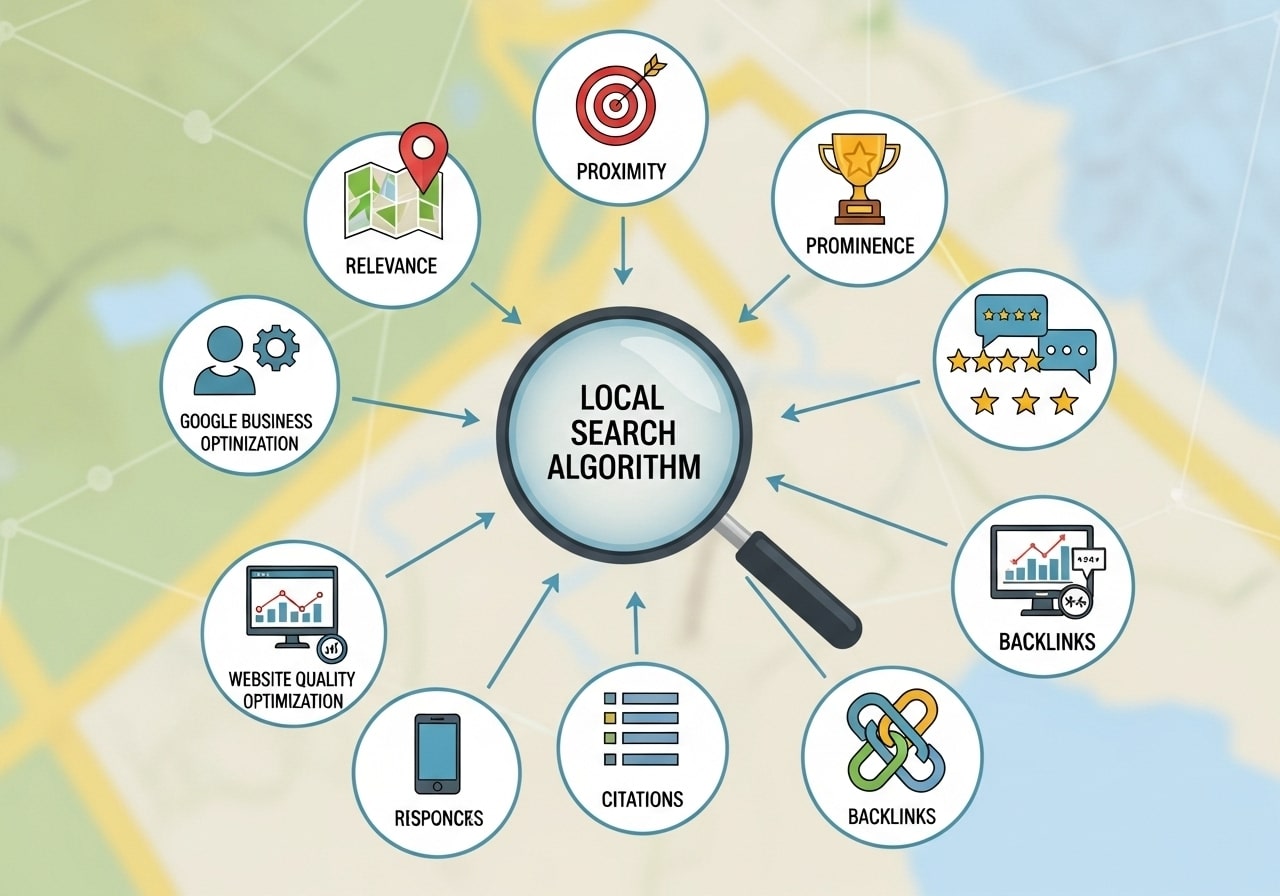
The Google ranking algorithm for local search considers three main categories:
- Relevance – Measures how well a business matches what someone is searching for.
- Distance – Looks at how far the business is from the searcher’s location.
- Prominence – Evaluates how well-known and established a business is both online and offline.
These Google algorithm factors work together to create a complex system that aims to provide users with the most helpful local search results. Understanding these factors helps businesses optimize their online presence to rank higher in local search results.
Google My Business Optimization
Your Google My Business (GMB) profile is perhaps the most important factor among all local ranking factors. This free tool from Google allows businesses to manage their online presence across Google Search and Maps.
Complete Business Information
Fill out every section of your GMB profile completely and accurately. This includes:
- Business name (exactly as it appears on your storefront)
- Complete address with proper formatting
- Phone number (local number preferred)
- Website URL
- Business hours (including holiday hours)
- Business category (choose the most specific category available)
- Business description (up to 750 characters)
Regular Updates and Posts
Google rewards active GMB profiles. Regular posting about updates, events, offers, and news signals to the Google search ranking factors that your business is active and engaging with customers. Posts should include relevant keywords naturally and high-quality images.
Photo and Video Content
Visual content significantly impacts local SEO factors. Upload high-quality photos of your:
- Business exterior and interior
- Products and services
- Team
Include photos of your business in action, as these perform better than stock photos. Videos can also boost engagement and provide additional ranking signals.
Local Citations and NAP Consistency
Citations are online mentions of your business name, address, and phone number (NAP). These serve as trust signals for search engines and are among the most important Google ranking factors for local search.
Primary Citation Sources
Focus on getting listed in major directories first:
- Google My Business
- Bing Places
- Apple Maps
- Facebook Business
- Yelp
- Better Business Bureau
- Industry-specific directories
NAP Consistency
Ensure your business name, address, and phone number are identical across all online platforms. Even small variations like “St.” versus “Street” can confuse search engines and dilute your local SEO efforts. This consistency is crucial for Google’s local ranking factors.
Quality Over Quantity
While having many citations can help, focus on quality sources relevant to your industry and location. A few high-quality citations from authoritative local websites often outperform dozens of low-quality directory listings.
Customer Reviews and Ratings
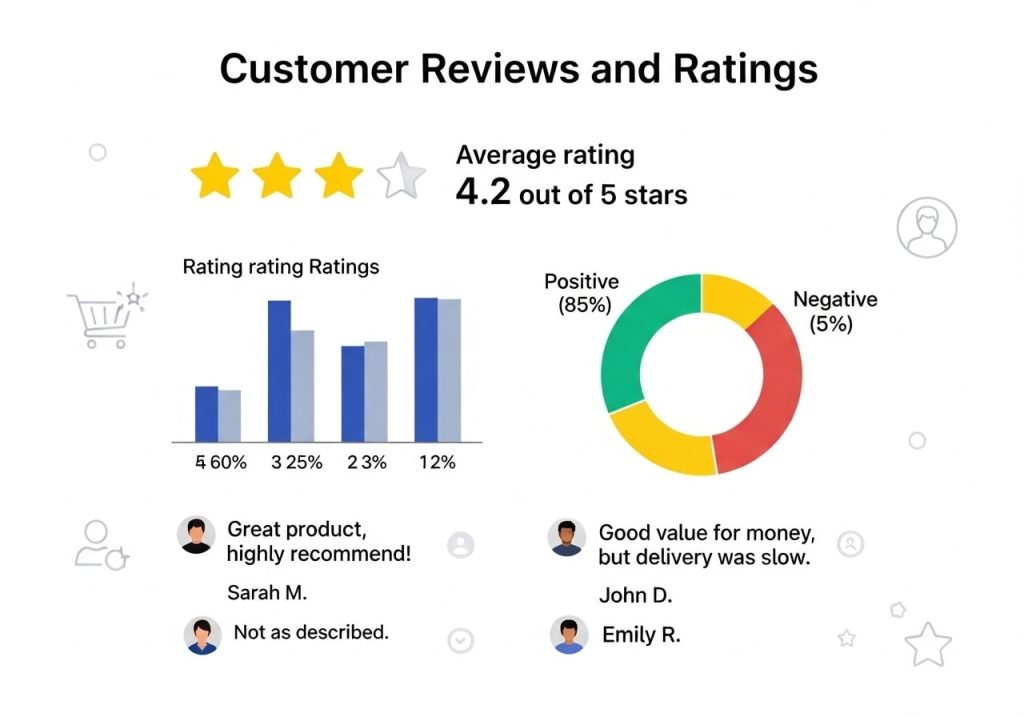
Reviews are powerful ranking factors that influence both search rankings and customer decisions. The Google ranking factor related to reviews considers both quantity and quality of reviews across various platforms.
Review Acquisition Strategy
Develop a systematic approach to earning reviews:
- Ask satisfied customers directly
- Send follow-up emails after purchases or services
- Include review requests in receipts or invoices
- Train staff to mention reviews during positive interactions
- Make the review process easy by providing direct links
Review Response Management
Responding to reviews, both positive and negative, shows engagement and professionalism. This activity signals to the algorithm Google search that you’re actively managing your online reputation.
- Always respond professionally
- Thank customers for positive reviews
- Address concerns in negative reviews constructively
Review Platform Diversity
While Google reviews are most important for Google SEO ranking factors, having reviews on multiple platforms strengthens your overall online presence. Focus on platforms where your customers are most likely to leave reviews.
On-Page Local SEO Elements
Your website’s on-page elements play a crucial role in local SEO ranking factor performance. These elements help search engines understand your business’s location and services.
Title Tags and Meta Descriptions
Include location-based keywords in your title tags and meta descriptions naturally.
- Example: “Best Italian Restaurant in Downtown Seattle” rather than just “Best Italian Restaurant.”
These elements are important Google page ranking factors for local search.
Header Tags (H2, H3)
Use header tags to structure your content and include local keywords where relevant. Ensure H1 is already present on the page, and use H2/H3 for sectioning.
Local Schema Markup
Implement local business schema markup on your website. This structured data helps search engines understand your business information and can lead to rich snippets in search results. Include:
- Business name and type
- Address and contact information
- Operating hours
- Price range
- Customer ratings
Contact Information
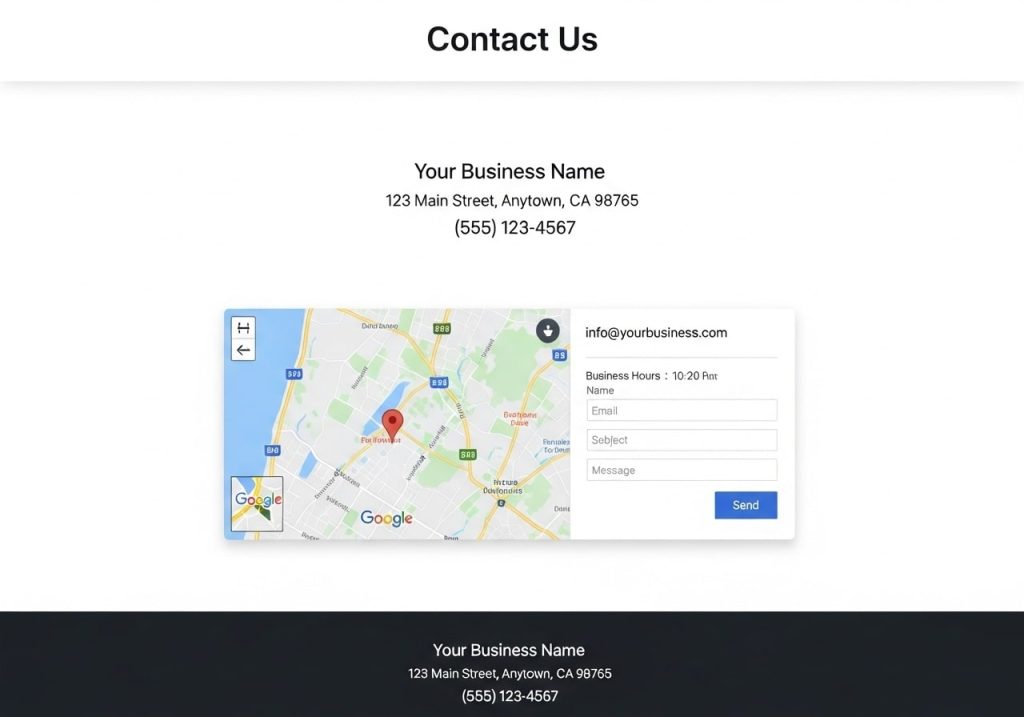
Display your NAP information prominently on every page, preferably in the header or footer. Create a dedicated contact page with detailed information, including a Google Map embed showing your location.
Local Link Building
Links from other local websites serve as important top SEO ranking factors for local search. These links act as votes of confidence and help establish your business’s local relevance.
Local Partnership Opportunities
Build relationships with other local businesses for mutual linking opportunities:
- Chamber of Commerce membership
- Local business associations
- Community event participation
- Charity involvement and sponsorships
- Local supplier and vendor relationships
Local Content and PR
Create newsworthy content that local publications and blogs might want to link to:
- Community involvement stories
- Local market insights
- Industry expertise related to local issues
- Participation in local events
Guest Posting and Collaborations
Write guest posts for local blogs, newspapers, and industry publications. This helps establish expertise while earning valuable local links that boost Google’s top ranking factors.
Distance and Proximity
Physical location relative to the searcher is one of the most straightforward top Google ranking factors for local search. While you can’t change your business location, you can optimize for proximity factors.
Service Area Optimization
If you serve multiple locations, create dedicated pages for each service area. Include specific local content for each area, such as:
- Local landmarks and neighborhoods
- Area-specific services or specialties
- Local customer testimonials
- Regional contact information
Location-Specific Content
Create content that demonstrates your connection to the local area:
- Local market guides
- Community event coverage
- Local partnership announcements
- Area-specific tips and advice
Website Performance and Mobile Experience
Technical SEO Google ranking factors significantly impact local search performance, especially since many local searches happen on mobile devices.
Page Speed Optimization
Fast-loading websites provide better user experiences and rank higher in search results. Optimize your site speed by:
- Compressing images
- Minimizing HTTP requests
- Using browser caching
- Optimizing CSS and JavaScript
- Choosing reliable hosting
Mobile Responsiveness
Ensure your website works perfectly on all mobile devices. Google uses mobile-first indexing, making mobile optimization crucial for Google algorithm factors. Test your site on various devices and screen sizes regularly.
Core Web Vitals
Google’s Core Web Vitals are important Google ranking factors that measure:
- Largest Contentful Paint (LCP) – loading performance
- First Input Delay (FID) – interactivity
- Cumulative Layout Shift (CLS) – visual stability
Content Relevance and Quality
High-quality, locally relevant content helps establish your expertise and improves your rankings for local search queries.
Local Content Strategy
Develop content that serves your local community:
- Local industry insights
- Community guides and resources
- Local event coverage
- Regional tips and advice
- Customer success stories from local clients
Keyword Integration
Naturally incorporate local keywords into your content without keyword stuffing. Use variations of your target keywords and include related terms that your local customers might search for.
Regular Content Updates
Fresh content signals to Google’s ranking algorithm that your website is active and current. Maintain a regular publishing schedule with locally relevant content.
Behavioral Signals
User behavior metrics are increasingly important ranking factors seo professionals need to consider for local search success.
Click-Through Rates
Higher click-through rates from local search results signal relevance to search engines. Improve CTRs by:
- Writing compelling meta descriptions
- Using local keywords in titles
- Maintaining accurate business information
- Encouraging positive reviews
Engagement Metrics
Time spent on site, pages per session, and bounce rate all influence Google ranking factors. Improve engagement by:
- Creating valuable local content
- Ensuring fast page load times
- Making navigation intuitive
- Providing clear calls to action
Common Mistakes to Avoid
Understanding what not to do is as important as knowing the correct local seo factors:
- Inconsistent NAP Information: Different versions of your business information across the web confuse search engines and weaken your local SEO efforts.
- Fake Reviews: Never create fake reviews or pay for review services. Google can detect these practices and may penalize your business severely.
- Keyword Stuffing Overusing keywords in your content, business descriptions, or GMB profile appears spammy and can hurt your rankings.
- Neglecting Mobile Users: Failing to optimize for mobile users means missing out on a significant portion of local searches.
- Ignoring Negative Reviews: Not responding to negative reviews or handling them poorly can damage your online reputation and rankings.
Future Trends in Local Search

The Google algorithm continues evolving, and staying ahead of trends helps maintain strong local search performance:
Voice Search Optimization
More people use voice search for local queries. Optimize for conversational keywords and questions people might ask voice assistants.
Visual Search
Google Lens and other visual search tools are becoming more popular. Ensure your business has high-quality, well-tagged images online.
Artificial Intelligence
AI increasingly influences Google algorithms, making user experience and genuine business information more important than ever.
Understanding and implementing these ranking factors of the local search algorithm requires ongoing effort and attention to detail. Local SEO success comes from consistently applying these best practices while adapting to changes in search behavior and Google ranking algorithms.
Focus on providing genuine value to your local community, maintaining accurate business information across all platforms, and creating content that truly serves your local customers’ needs. By addressing these key areas systematically, your business can improve its visibility in local search results and attract more customers from your area.
Ready to improve your local search rankings?
Start by auditing your current local SEO performance and identifying which of these ranking factors need the most attention. Consistent implementation of these strategies will help your business succeed in local search results.
FAQs
Why are customer reviews so important for my business?
Customer reviews act like word-of-mouth recommendations in the digital world. They help build trust with potential customers who don’t know your business yet. Most people read reviews before making a purchase decision, and positive reviews can be the deciding factor that brings new customers to your door.
What’s the best time to ask customers for a review?
The sweet spot is right after a positive interaction or successful service completion. This could be immediately after delivery, following a great customer service experience, or when you know the customer is happy with their purchase. Don’t wait too long – strike while the positive experience is fresh in their mind.
How do I ask for reviews without sounding pushy?
Keep it simple and genuine. You can say something like, “We’d love to hear about your experience – would you mind leaving us a quick review?” Make it feel optional, not mandatory. You can also explain how much their feedback helps your small business grow, which many customers appreciate.
Should I offer incentives for reviews?
You can offer small incentives like discount codes for future purchases, but be careful. Some review platforms have rules against incentivized reviews. Focus on making the review process easy and convenient rather than just offering rewards. A simple “thank you” gesture works better than anything that feels like payment.
What should I do about negative reviews?
Don’t panic or ignore them. Respond professionally and quickly. Acknowledge the customer’s concerns, apologize if needed, and offer to make things right. This shows other potential customers that you care about problems and work to fix them. Many people actually respect businesses that handle criticism well.
How can I make it easier for customers to leave reviews?
Send direct links to your review profiles via email or text message. Create QR codes that customers can scan with their phones. The fewer steps between the customer and the review form, the more likely they are to complete it. Remove any barriers that might stop them from following through.
Which review platforms should I focus on?
Start with Google Reviews since they show up in search results. Then consider platforms where your customers naturally spend time – this might be Facebook, Yelp, industry-specific sites, or your own website. Don’t spread yourself too thin; it’s better to have many reviews on a few platforms than just a couple on many.
How often should I ask customers for reviews?
Don’t ask every single customer immediately – this can feel overwhelming. Focus on customers who had particularly good experiences or long-term clients who are clearly satisfied. A good rule of thumb is to ask happy customers naturally as part of your normal follow-up process.
Can I respond to positive reviews too?
Absolutely! Thank customers for taking the time to write positive reviews. Keep your responses short and genuine. This shows you value feedback and can encourage others to leave reviews when they see you actually read and appreciate them.
What if I’m not getting many reviews despite asking?
Check if your review process is too complicated or if you’re asking at the wrong time. Sometimes customers need a gentle reminder a few days after your initial request. You might also consider following up with customers who had great experiences but haven’t left reviews yet – sometimes they just forget.