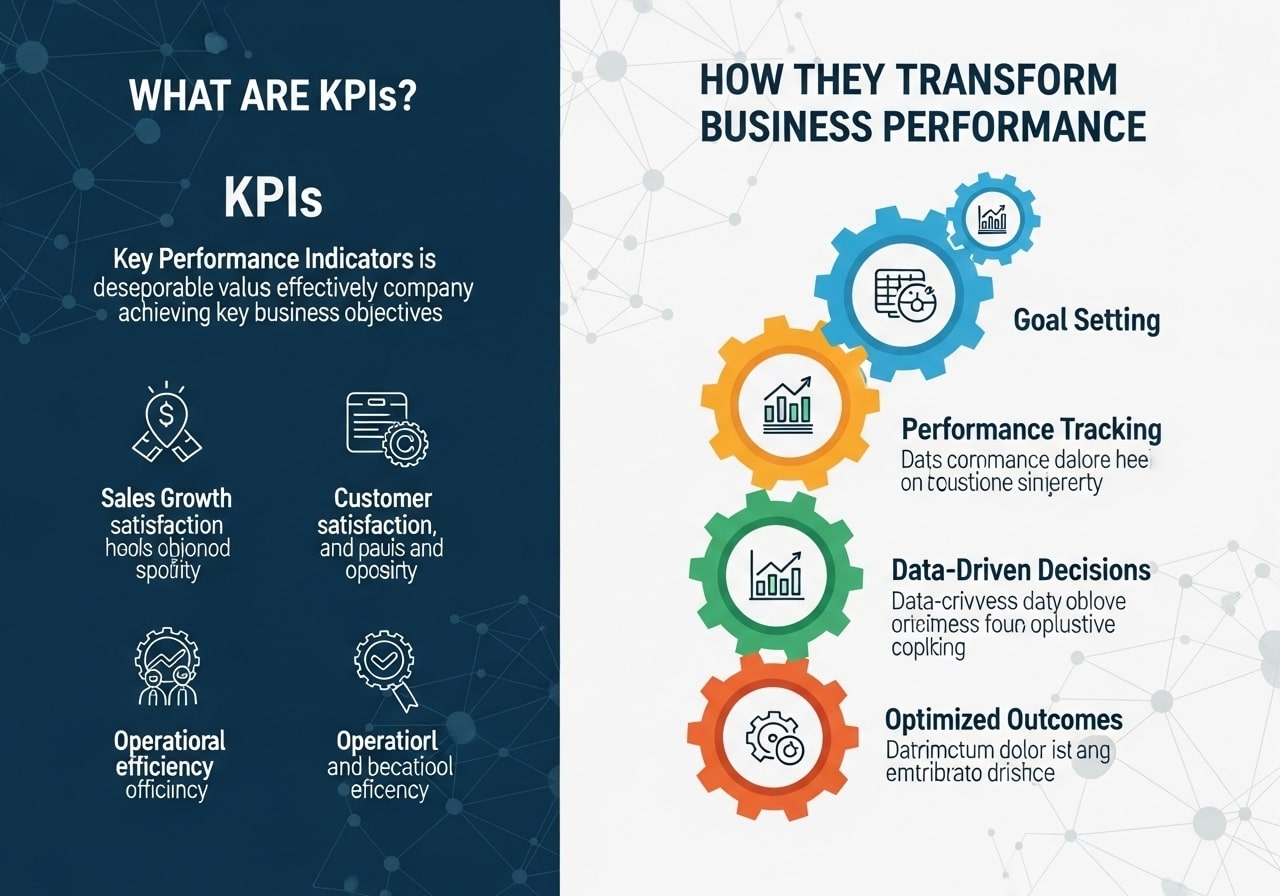
What is KPIs stand for? Key Performance Indicators – specific, measurable values that show how well a company, department, or individual is achieving important business goals. Think of your business’s report card. Just like students get grades to see how well they’re doing in school, businesses use KPIs to see how well they’re performing in different areas.
KPIs are not just random numbers. They’re carefully chosen measurements that directly connect to your most important business objectives. For example, if your main goal is to increase customer satisfaction, your KPI might be the percentage of customers who rate your service as “excellent” or “very good.”
The beauty of KPIs lies in their simplicity and focus. Instead of drowning in endless data, Key results help you focus on what truly matters for your success. They answer the question: “Are we moving in the right direction?”
What are KPIs in Business
Success indicators in business refers to the specific metrics that companies use to measure their progress toward strategic goals. Business KPIs serve as a compass, guiding decision-making and helping teams stay aligned with company objectives.
Every successful business relies on KPIs to:
- Monitor Performance: Track how well different parts of the business are working
- Make Better Decisions: Use real data instead of guessing
- Identify Problems Early: Spot issues before they become major problems
- Motivate Teams: Give employees clear targets to work toward
- Communicate Progress: Show stakeholders how the business is performing
Business KPIs typically fall into several categories. Financial KPIs track money-related performance, like revenue growth or profit margins. Customer KPIs measure how well you’re serving your customers, such as satisfaction scores or retention rates. Operational KPIs look at internal processes, like production efficiency or employee productivity.
The key is choosing KPIs that directly relate to your business goals. If you’re trying to grow your customer base, tracking monthly active users (MAUs) makes sense. If you’re focused on profitability, monitoring your gross margin percentage would be more relevant.
Exploring Key Performance Metrics Across Industries
What is KPIs in Marketing
KPIs in marketing involve measuring how well your marketing efforts are working. Marketing KPIs help you understand which campaigns are successful and which ones need improvement.
Common marketing KPIs include:
- Conversion Rate: Percentage of visitors who take a desired action
- Cost Per Acquisition (CPA): How much you spend to get one new customer
- Return on Marketing Investment (ROMI): How much revenue your marketing generates
- Lead Quality Score: How likely your leads are to become customers
- Brand Awareness: How many people know about your brand
What are KPIs in Digital Marketing
KPIs in digital marketing focus on online performance metrics. Digital marketing KPIs are particularly important because online activities can be tracked more precisely than traditional marketing.
Key digital marketing KPIs include:
- Click-Through Rate (CTR): Percentage of people who click on your ads
- Bounce Rate: Percentage of visitors who leave after viewing one page
- Social Media Engagement: Likes, shares, comments on your social posts
- Email Open Rate: Percentage of people who open your emails
- Search Engine Rankings: Where your website appears in search results
What are KPIs in Sales
KPIs in sales measure how well your sales team is performing. Sales KPIs help identify top performers, spot training needs, and forecast future revenue.
Important sales KPIs include:
- Sales Revenue: Total money brought in from sales
- Conversion Rate: Percentage of leads that become customers
- Average Deal Size: Typical value of each sale
- Sales Cycle Length: How long it takes to close a deal
- Customer Lifetime Value: Total revenue expected from each customer
Ecommerce KPIs
E-commerce KPIs are crucial for online businesses. These metrics help you understand customer behavior and optimize your online store.
Essential ecommerce KPIs include:
- Average Order Value (AOV): Average amount customers spend per order
- Cart Abandonment Rate: Percentage of shoppers who leave without buying
- Customer Acquisition Cost: Cost to gain one new customer
- Return Customer Rate: Percentage of customers who buy again
- Product Page Views: How many people look at your products
What are KPIs in HR

What are KPIs in HR that focus on people-related metrics? HR KPIs help organizations manage their workforce effectively and create better employee experiences.
Key HR KPIs include:
- Employee Turnover Rate: Percentage of employees who leave
- Time to Hire: How long it takes to fill open positions
- Employee Satisfaction Score: How happy employees are with their jobs
- Training Completion Rate: Percentage of employees who finish training
- Absenteeism Rate: How often employees miss work
Accounting KPIs
Accounting KPIs help businesses monitor their financial health. These metrics are essential for making sound financial decisions and ensuring long-term sustainability.
Important accounting KPIs include:
- Gross Profit Margin: Percentage of revenue left after direct costs
- Current Ratio: Ability to pay short-term debts
- Days Sales Outstanding: How long it takes to collect payments
- Debt-to-Equity Ratio: The Company’s debt compared to shareholder equity
- Cash Flow: Money coming in and going out of the business
What are KPIs and Metrics: Understanding the Difference
What KPIs and metrics are often confused by people because the terms are sometimes used interchangeably. However, there’s an important distinction.
Metrics are any measurements you can take from your business. They’re like raw data points – numbers that tell you what happened. For example, “We had 1,000 website visitors last month” is a metric.
KPIs are a special subset of metrics that directly relate to your most important goals. They’re the metrics that matter most for your success. Using the same example, if growing website traffic is crucial for your business goals, then monthly website visitors become a KPI.
Think of it this way: All KPIs are metrics, but not all metrics are KPIs. You might track hundreds of metrics, but you should only have a handful of KPIs – typically 3-7 for any given goal or department.
The key difference is relevance and importance. KPIs are chosen because they have a direct impact on your success, while metrics might just be interesting numbers to know.
KPIs vs Other Performance Measures
What are KPIs and KRAs
What Its and KRAs refer to is the relationship between Key Performance Indicators and Key Result Areas. KRAs define the main areas where you need to achieve results, while KPIs measure how well you’re performing in those areas.
For example, if “Customer Service” is a KRA, your KPIs might include customer satisfaction scores, response time, and resolution rate.
What are KPIs and OKRs
What are KPIs and OKRs compares two different goal-setting frameworks. OKRs (Objectives and Key Results) are typically more ambitious and time-bound goals, while KPIs are ongoing measurements.
OKRs answer “What do we want to achieve?” while KPIs answer “How well are we performing?”
What are KPIs and SLAs
What are Key performance metrics and SLAs looks at performance indicators versus Service Level Agreements. SLAs are promises or contracts about performance standards, while KPIs measure whether you’re meeting those standards.
How Tracking KPIs Improves Them
- How tracking KPIs improves them is based on the simple principle: “What gets measured gets managed.” When you consistently track KPIs, several things happen:
- Increased Awareness: Teams become more conscious of their performance when they see regular KPI reports. This awareness naturally leads to better focus on important activities.
- Early Problem Detection: Regular tracking helps you spot problems before they become serious. If your customer satisfaction KPI starts declining, you can investigate and fix issues quickly.
- Data-Driven Decisions: Instead of relying on gut feelings, you can make decisions based on actual performance data. This leads to more effective solutions.
- Motivation and Accountability: When people know their performance is being measured, they tend to work harder to improve their numbers. Clear KPIs create accountability.
- Continuous Improvement: Regular tracking reveals trends and patterns. You can see what works and what doesn’t, allowing you to continuously refine your approach.
- Better Resource Allocation: KPI data helps you decide where to invest time, money, and effort for maximum impact.
Why Some Companies Don’t Track KPIs
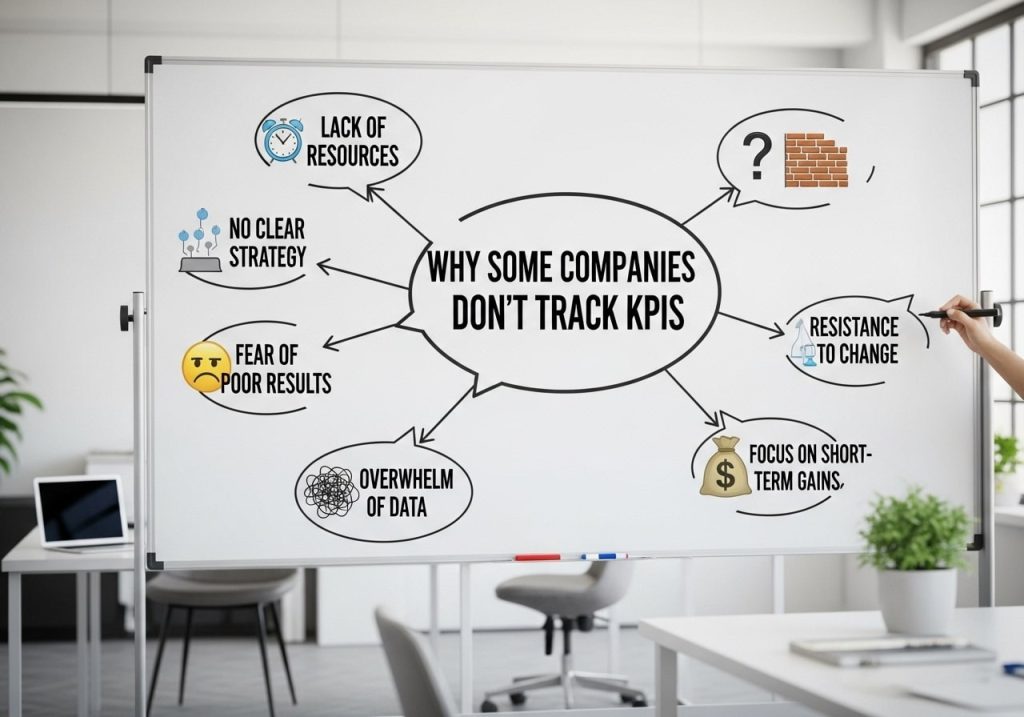
Despite the benefits, some organizations don’t track KPIs effectively. Common reasons include:
- Lack of Clear Goals: Without clear objectives, it’s impossible to choose relevant KPIs. Some companies skip this foundational step.
- Too Many Metrics: Some organizations try to track everything, making it impossible to focus on what really matters.
- Poor Data Quality: If your data is unreliable, your KPIs won’t be useful. Some companies give up rather than fix their data collection.
- No Action Plans: Tracking KPIs without acting on the insights is pointless. Some organizations collect data but don’t use it to make improvements.
- Resistance to Change: Some teams resist KPI tracking because they fear being held accountable or worry about additional workload.
- Technical Challenges: Setting up proper KPI tracking systems can be complex, especially for smaller organizations with limited resources.
Setting Up Effective This
Creating effective KPIs requires careful planning and consideration. Here’s how to do it right:
- Start with Clear Objectives: Before choosing any KPIs, make sure you have clear, specific goals. Your KPIs should directly support these objectives.
- Use the SMART Framework: Good KPIs are Specific, Measurable, Achievable, Relevant, and Time-bound. This framework ensures your KPIs are practical and useful.
- Choose Leading and Lagging Indicators: Leading indicators predict future performance, while lagging indicators show past results. A good KPI mix includes both types.
- Keep It Simple: Avoid complex calculations that are hard to understand. The best KPIs are simple and intuitive.
- Set Realistic Targets: Your KPI targets should be challenging but achievable. Unrealistic targets demoralize teams.
- Regular Review and Updates: KPIs should evolve as your business grows and changes. Review them regularly to ensure they remain relevant.
Common Success metrics Examples Across Industries
What are KPIs in Retail
KPIs in retail include metrics that help stores and online retailers understand their performance:
- Sales per Square Foot: Revenue generated per unit of store space
- Inventory Turnover: How quickly inventory is sold and replaced
- Foot Traffic: Number of people visiting your store
- Conversion Rate: Percentage of visitors who make a purchase
- Average Transaction Value: Typical amount spent per purchase
What are KPIs in Project Management
What are Key performance metrics in project management helps teams deliver projects on time, within budget, and meeting quality standards:
- Schedule Performance Index: Whether projects are on time
- Budget Variance: Difference between planned and actual costs
- Quality Metrics: Number of defects or errors
- Team Productivity: Amount of work completed per time period
- Stakeholder Satisfaction: How happy clients are with project results
Clinical Trial KPIs Template
Clinical trial Key performance metrics template includes specialized metrics for pharmaceutical and medical research:
- Patient Recruitment Rate: How quickly eligible patients join the trial
- Protocol Deviation Rate: Frequency of departures from study procedures
- Data Quality Index: Accuracy and completeness of collected data
- Retention Rate: Percentage of patients who complete the study
- Adverse Event Rate: Frequency of negative side effects
Optimizing Execution Best Practices
Successfully implementing KPIs requires more than just choosing the right metrics. Here are the best practices for KPI success:
- Get Leadership Buy-In: KPI initiatives work best when senior management actively supports and participates in the process.
- Involve Your Team: Include team members in KPI selection and target setting. People are more committed to goals they help create.
- Invest in Good Tools: Whether it’s Excel, specialized software, or custom dashboards, make sure you have reliable tools for tracking and reporting.
- Create Clear Dashboards: Present KPI data in clear, visual formats that are easy to understand at a glance.
Understanding what KPIs are just the beginning. The real value lies in selecting the right indicators for your specific situation, tracking them consistently, and utilizing the insights to drive continuous improvement. Whether you’re in sales, marketing, operations, or any other business area, Goal tracking provides the clarity and focus needed to achieve your goals.
Remember, the best KPI system is one that your team actually uses. Please keep it simple, keep it relevant, and keep it focused on what matters most for your success. With the right approach, Key performance metrics become powerful tools that guide your organization toward better performance and sustained growth.
Ready to start tracking your Metrics definition? Begin by identifying your top 3-5 business objectives, then choose one simple, measurable indicator for each. Start tracking these consistently, and you’ll quickly see how KPIs can transform your decision-making and results.
FAQs
What does KPI actually mean?
KPI stands for Key Performance Indicator. Think of it as a way to measure how well your business is doing in specific areas. Just like checking your car’s speedometer to see how fast you’re going, KPIs help you see if your business is moving in the right direction.
Why should I care about KPIs for my business?
KPIs help you make smart decisions instead of just guessing. When you track the right numbers, you can spot problems early, see what’s working well, and figure out where to spend your time and money. It’s like having a GPS for your business journey.
What are some simple KPI examples I can start with?
Some basic ones include monthly sales numbers, how many new customers you get each month, customer satisfaction scores, website visitors, and profit margins. Pick 3-5 that matter most to your specific business goals.
How often should I check my KPIs?
This depends on what you’re measuring. Sales numbers might be worth checking weekly, while customer satisfaction could be monthly. The key is being consistent – don’t check them obsessively every day, but don’t ignore them for months either.
What’s the difference between KPIs and regular business metrics?
Regular metrics are just numbers about your business, like total website clicks. KPIs are the important numbers that directly connect to your main business goals. Not every number you can measure deserves to be a KPI – only the ones that really matter.
How do I know if I’m picking the right KPIs?
Good KPIs should be clear, measurable, and tied to something you want to achieve. Ask yourself: “If this number improves, will it help my business succeed?” If the answer is yes, you’re on the right track.
Can having too many KPIs hurt my business?
Yes, definitely. When you try to track everything, you end up focusing on nothing. Most successful businesses stick to 5-10 KPIs max. Pick the ones that matter most and ignore the rest – you can always add more later.
How do KPIs help with making business decisions?
KPIs give you real facts instead of gut feelings. When you see your customer acquisition cost going up or your customer satisfaction dropping, you know exactly where to focus your attention. It takes the guesswork out of running your business.
What tools do I need to track KPIs effectively?
You don’t need expensive software to start. A simple spreadsheet works fine for most small businesses. As you grow, tools like Google Analytics for websites or basic CRM software can help, but keep it simple at first.
How long does it take to see results from tracking KPIs?
You might spot some quick wins within a few weeks, but real improvements usually take 2-3 months to show up clearly. The important thing is to be patient and consistent with tracking. Think of it as a long-term habit, not a quick fix.