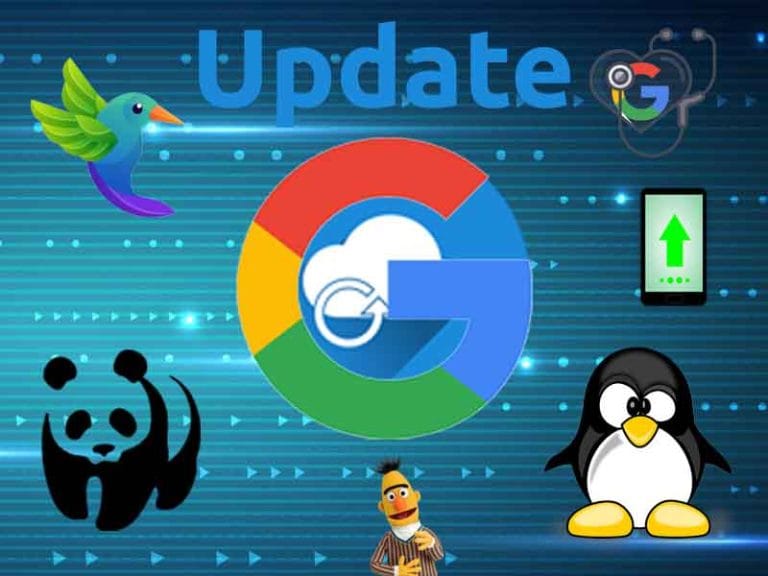
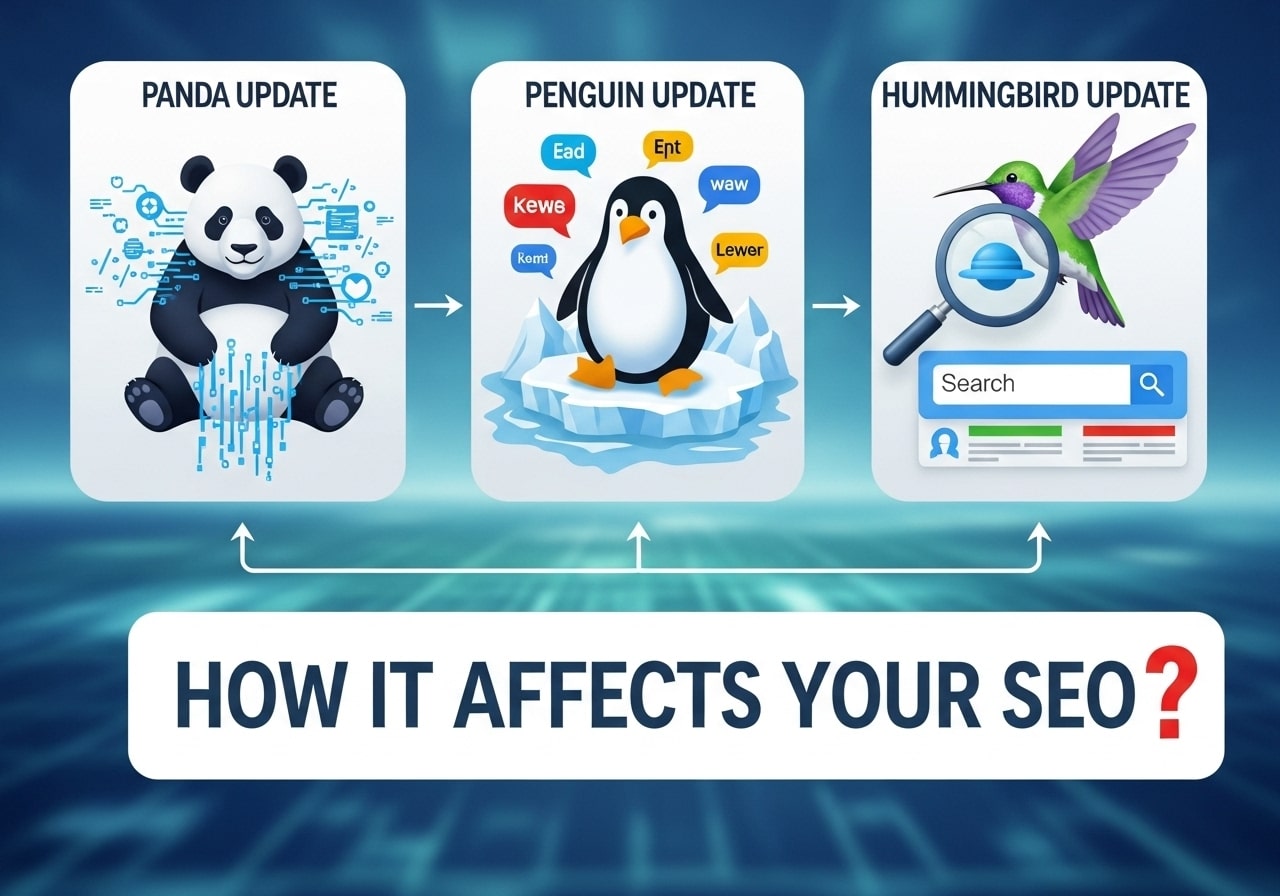
Google’s Panda, Penguin, and Hummingbird updates have completely changed how websites rank in search results. If you’re a website owner, SEO professional, or digital marketer, understanding these algorithm changes is crucial for maintaining and improving your search visibility.
These three major Google updates each target different aspects of your website. Panda focuses on content quality and user experience. Penguin cracks down on spammy link-building practices and keyword stuffing. Hummingbird revolutionized how Google understands conversational search queries and user intent.
We’ll break down how each update specifically affects your SEO strategy and what you need to do differently. You’ll also learn practical ways to measure if these algorithm changes have impacted your website’s performance and discover proven techniques to future-proof your SEO against upcoming Google updates.
Understanding Google’s Major Algorithm Updates

What Panda Update Targets and Why It Matters
The Google Panda update completely changed how websites get ranked by focusing on content quality. This algorithm update specifically targets sites with thin, duplicate, or low-quality content that provides little value to users. When Panda rolls out, websites with content farms, excessive advertising, or scraped material often see their rankings drop significantly.
Panda evaluates several key factors: content originality, depth of information, user engagement metrics, and overall site quality. Sites that prioritize quantity over quality typically suffer under this update. The algorithm can detect when content is stuffed with keywords, lacks substance, or appears to be written solely for search engines rather than human readers.
What makes Panda particularly challenging is its focus on site-wide quality signals. Even if most of your content is excellent, a significant portion of low-quality pages can drag down your entire domain’s performance. This means every page on your website needs to meet Google’s quality standards to maintain strong rankings.
Penguin Update’s Focus on Link Quality
The Penguin update revolutionized link building by penalizing websites that engage in manipulative link schemes. This algorithm specifically hunts for unnatural linking patterns, including paid links, link farms, excessive keyword-rich anchor text, and reciprocal linking schemes designed to game the system.
Before Penguin, many websites could rank well by acquiring large quantities of low-quality backlinks. The update changed this dynamic by prioritizing link relevance, authority, and natural acquisition patterns. Websites that previously relied on spammy link building tactics found their rankings plummeting overnight.
Penguin panda hummingbird updates work together to create a more sophisticated ranking system. While Panda focuses on content quality and Penguin targets link manipulation, both algorithms share the goal of promoting websites that earn their rankings through legitimate means rather than gaming tactics.
Recovery from Penguin penalties requires removing or disavowing toxic backlinks, which can be a lengthy and complex process. The algorithm’s real-time nature means that improvements in link quality can lead to ranking recovery, but the process demands patience and systematic cleanup efforts.
Hummingbird’s Impact on Search Intent
Hummingbird represents Google’s shift toward understanding conversational queries and search intent rather than just matching keywords. This update enables Google to interpret the meaning behind searches, especially longer, more complex queries that mirror how people naturally speak.
The algorithm excels at processing semantic search patterns and contextual relationships between words. When someone searches “where can I find good Italian food near downtown,” Hummingbird understands they’re looking for restaurant recommendations in a specific location, not just pages containing those exact words.
This change affects SEO strategies significantly because panda penguin and hummingbird updates together emphasize user satisfaction over keyword optimization. Content creators must now focus on answering real questions and providing comprehensive information rather than targeting specific keyword phrases.
Voice search optimization became crucial after Hummingbird’s implementation. The algorithm’s ability to process natural language queries made it essential for websites to optimize for conversational keywords and long-tail phrases that reflect how people actually speak and ask questions.
Timeline and Evolution of Each Update
| Update | Launch Date | Primary Focus | Impact Level |
|---|---|---|---|
| Panda | February 2011 | Content Quality | Site-wide |
| Penguin | April 2012 | Link Quality | Page/Site-wide |
| Hummingbird | August 2013 | Search Intent | Query Processing |
Google panda penguin updates began with Panda in 2011, targeting content farms and low-quality sites. The initial rollout affected approximately 12% of search results, making it one of Google’s most significant algorithm changes. Subsequent Panda updates became more frequent and refined, with Google eventually integrating the algorithm into their core ranking system.
Penguin’s timeline shows a more sporadic update pattern. The original 2012 launch was followed by several data refreshes and major updates, with Penguin 4.0 in 2016 marking the transition to real-time processing. This evolution means that google penguin panda recovery efforts can now show results more quickly than in the past.
Hummingbird’s implementation was unique because Google replaced their entire search algorithm rather than adding an update layer. This comprehensive overhaul affected 90% of searches but was designed to improve results rather than penalize websites. The smooth transition demonstrated Google’s growing sophistication in algorithm development and deployment.
Each panda penguin update built upon previous lessons, creating increasingly nuanced systems for evaluating website quality. The evolution shows Google’s commitment to delivering relevant, high-quality search results while making it harder for websites to manipulate rankings through artificial means.
How Panda Update Transforms Your Content Strategy

Quality Content Requirements That Boost Rankings
The Google Panda update fundamentally changed how search engines evaluate content quality. Your pages need to demonstrate expertise, authority, and trustworthiness to rank well in today’s landscape. Original, well-researched content that provides genuine value to readers becomes your strongest ranking asset.
Google’s algorithms now scrutinize content depth and comprehensiveness. Surface-level articles that barely scratch the topic won’t cut it anymore. Your content should answer user questions thoroughly, include relevant statistics, examples, and actionable insights. Think of each page as a complete resource that users would bookmark and share.
Content freshness plays a crucial role too. Regular updates to existing pages signal to Google that your information stays current and relevant. This doesn’t mean rewriting everything monthly, but adding new sections, updating statistics, or expanding on emerging trends keeps your content competitive.
User engagement metrics heavily influence rankings post-Panda. Pages with high bounce rates, low time-on-page, or minimal social shares send negative signals. Your content must capture attention immediately and maintain reader interest throughout.
Avoiding Thin Content Penalties That Kill Traffic
Thin content represents one of the biggest threats to your search visibility after the Panda penguin updates. Pages with minimal text, duplicate information, or auto-generated content face severe ranking penalties that can devastate organic traffic overnight.
Common thin content culprits include:
- Product pages with only basic specifications
- Category pages lacking descriptive text
- Blog posts under 300 words
- Pages with mostly images and minimal text
- Duplicate content across multiple URLs
Your content audit should identify these problematic pages immediately. Each page needs a unique value proposition and substantial information that justifies its existence in search results. Generic product descriptions copied from manufacturers won’t survive Google’s quality filters.
Doorway pages designed solely for search engines represent another penalty risk. These pages offer little user value while attempting to rank for specific keywords. Google’s algorithms easily detect and demote such manipulative tactics.
User Experience Signals That Google Now Prioritizes
The panda penguin and hummingbird updates elevated user experience signals as ranking factors. Page loading speed directly impacts your search positions – slow sites lose rankings and users simultaneously. Core Web Vitals metrics like Largest Contentful Paint and Cumulative Layout Shift now influence your visibility.
Mobile responsiveness isn’t optional anymore. With mobile-first indexing, Google primarily uses your mobile site version for ranking decisions. Your content must display perfectly across all devices, with touch-friendly navigation and readable font sizes.
Site architecture affects user experience significantly. Clear navigation, logical URL structures, and internal linking help users find relevant information quickly. Broken links, 404 errors, or confusing menu structures frustrate visitors and hurt rankings.
Content formatting enhances readability and engagement. Use headers, bullet points, and short paragraphs to break up large text blocks. Images, videos, and infographics make complex topics more digestible while increasing time spent on pages.
Search intent matching becomes critical for user satisfaction. Your content must align perfectly with what users expect when typing specific queries. Mismatched intent leads to quick exits and ranking drops.
Penguin Update’s Link Building Game Changes

Identifying Toxic Backlinks That Harm Your Site
The penguin update revolutionized how Google evaluates backlinks, making it crucial to spot harmful links before they damage your rankings. Toxic backlinks typically come from low-quality directories, link farms, private blog networks (PBNs), and sites with irrelevant content to your niche.
Common warning signs include:
- Links from sites with unusually high outbound link counts
- Backlinks with over-optimized anchor text matching your target keywords exactly
- Links from foreign language sites unrelated to your business
- Sudden spikes in backlink acquisition that appear unnatural
Use tools like Google Search Console, Ahrefs, or SEMrush to audit your link profile regularly. Look for patterns that seem manipulative rather than organic growth. Sites with poor domain authority, thin content, or penalties from previous google penguin panda updates should raise red flags.
Building High-Quality Links That Pass Google’s Tests
Post-penguin update in seo, earning quality backlinks requires a completely different approach. Focus on creating genuinely valuable content that naturally attracts links from authoritative websites in your industry.
Effective strategies include:
- Guest posting on reputable sites with editorial standards
- Creating original research, surveys, or industry reports
- Building relationships with journalists and bloggers through HARO (Help a Reporter Out)
- Developing linkable assets like tools, calculators, or comprehensive guides
Quality over quantity became the new mantra after panda penguin and hummingbird updates. A single link from a trusted industry publication carries more weight than dozens of directory submissions or comment links.
Recovery Strategies for Penguin Penalties
If your site got hit by a Penguin penalty, recovery requires systematic cleanup and patience. Start by conducting a thorough backlink audit using Google Search Console data combined with third-party tools.
Google penguin panda recovery follows these steps:
- Document everything – Create spreadsheets tracking all toxic links found
- Contact webmasters – Request removal of harmful links via email
- Build a disavow file – Include links you cannot get removed manually
- Submit through Google Search Console – Upload your disavow file properly formatted
- Wait and monitor – Penguin updates used to be manual but now process automatically
Recovery timeframes vary, but most sites see improvements within 3-6 months if they’ve properly addressed the issues. Keep detailed records of your cleanup efforts since you may need to reference them later.
Natural Link Patterns That Satisfy Algorithm Requirements
The penguin panda hummingbird trio taught us that natural link building follows predictable patterns. Healthy link profiles grow gradually over time rather than experiencing sudden jumps or drops.
Natural characteristics include:
| Natural Pattern | Artificial Pattern |
|---|---|
| Varied anchor text distribution | Keyword-stuffed anchors |
| Links from diverse domains | Same sources repeatedly |
| Gradual growth over time | Sudden acquisition spikes |
| Editorial context around links | Stand-alone link placement |
Your anchor text should include branded terms, naked URLs, generic phrases like “click here,” and only occasionally your target keywords. The what is google panda and penguin updates question often comes up because both algorithms work together – Panda evaluates content quality while Penguin focuses on link authenticity.
Monitor your link velocity and ensure new backlinks come from contextually relevant sources. Links earned through genuine relationships and valuable content contributions will always outperform manufactured link schemes in the long run.
Hummingbird’s Conversational Search Revolution

Optimizing for Long-Tail Keywords and Natural Language
Google’s Hummingbird update changed everything about how search engines understand user intent. Instead of focusing on individual keywords, the algorithm now grasps the full context and meaning behind search queries. This shift means your content needs to match how people naturally speak and ask questions.
Long-tail keywords became incredibly valuable after Hummingbird rolled out. People don’t search for “pizza” anymore – they ask “where can I find the best gluten-free pizza near downtown Seattle?” Your content should target these specific, conversational phrases that real users type into search boxes.
Writing naturally while incorporating these longer phrases takes practice. Instead of stuffing “best pizza restaurant” into every paragraph, create content that flows like normal conversation. Answer questions the way you’d explain something to a friend, using the exact words and phrases your audience uses when they talk about your topic.
The beauty of this approach is that it actually makes your content more helpful and engaging. When you write for real questions and natural language patterns, you’re creating content that genuinely serves your audience’s needs.
Creating Content That Answers User Questions Directly
Hummingbird rewards content that directly addresses what users want to know. The algorithm has gotten incredibly smart at matching search intent with relevant answers, which means your content strategy needs to focus on being genuinely helpful.
Start by researching the actual questions your audience asks. Tools like Answer the Public, Google’s “People Also Ask” sections, and social media conversations reveal the specific language people use when seeking information about your topic. These insights help you create content that speaks directly to user needs.
Structure your content to provide immediate value. Use clear headings that mirror common questions, and follow up with comprehensive answers. If someone searches “how long does SEO take to work,” your content should address that question head-on, not dance around it with generic information.
The question-and-answer format works particularly well in the post-Hummingbird world. Consider creating FAQ sections, detailed how-to guides, and problem-solving content that matches search queries word-for-word. This approach helps search engines understand exactly what your content covers and when to show it to users.
Local SEO Benefits From Semantic Search Understanding
Hummingbird’s semantic search capabilities revolutionized local SEO by better understanding location-based intent and context. The algorithm now recognizes when someone searches for “coffee shop” versus “coffee shop near me” and delivers dramatically different results based on that subtle difference.
Local businesses saw immediate benefits from this improved understanding. When people search for services “near me” or mention specific neighborhoods, Hummingbird connects those queries with relevant local businesses more accurately than previous algorithms ever could.
Your local SEO strategy should leverage this semantic understanding by creating location-specific content that sounds natural. Instead of repeating “Denver plumber” fifty times on a page, write about solving plumbing problems for Denver homeowners, mention specific neighborhoods you serve, and discuss local challenges like hard water or seasonal pipe issues.
Google My Business optimization becomes even more important when you consider how Hummingbird processes local intent. Complete profiles with accurate business information, regular updates, and customer reviews help the algorithm understand your business context and match you with relevant local searches.
Voice Search Optimization Strategies That Drive Results
Voice search exploded in popularity right alongside Hummingbird’s rollout, and the connection isn’t coincidental. The algorithm’s natural language processing capabilities made voice search actually useful for finding information.
People talk differently than they type, and your content needs to reflect that reality. Voice searches tend to be longer, more conversational, and question-based. Someone might type “weather tomorrow” but ask their voice assistant “what’s the weather going to be like tomorrow morning?”
Optimize for these conversational patterns by including question-based headings and natural-sounding answers throughout your content. Think about how people would ask about your products or services out loud, then create content that matches those speech patterns.
Featured snippets play a huge role in voice search results since virtual assistants often read these highlighted answers aloud. Structure your content to qualify for these snippets by providing clear, concise answers to common questions. Use numbered lists, bullet points, and direct responses that search engines can easily extract and present as voice search results.
The penguin panda hummingbird trilogy of updates fundamentally changed how we approach SEO, with Hummingbird specifically transforming our understanding of search intent and natural language processing. Your content strategy must evolve to match these changes, focusing on genuine helpfulness rather than keyword manipulation.
Measuring Algorithm Impact on Your Website Performance

Key Metrics That Reveal Algorithm Effects
Tracking the right performance indicators helps you spot when panda penguin and hummingbird updates have impacted your website. Organic traffic drops or spikes often signal algorithm changes, but digging deeper reveals the true story.
Core Ranking Metrics to Monitor:
- Organic click-through rates (CTR) – Sudden drops may indicate title tag or meta description visibility issues
- Average session duration – Sharp decreases could signal content quality problems from Panda updates
- Bounce rate fluctuations – High bounce rates often correlate with panda penguin penalties
- Keyword ranking positions – Track your most valuable terms across different search result pages
- Indexed pages count – Algorithm updates sometimes cause pages to disappear from Google’s index
Traffic Quality Indicators:
Your conversion rates tell a deeper story than raw visitor numbers. When google panda penguin updates hit, you might see traffic maintain but conversions plummet. This happens when algorithm changes push lower-quality visitors to your site while better prospects go elsewhere.
Page-level metrics reveal which content sections algorithms target most. Compare landing page performance before and after major updates to identify patterns. Pages with thin content typically suffer during Panda rollouts, while those with unnatural link profiles get hit by Penguin adjustments.
Tools for Monitoring Traffic and Ranking Changes
Professional SEO monitoring requires the right toolkit to catch algorithm impacts quickly. Free and premium options each offer unique advantages for tracking panda and penguin updates.
Essential Free Monitoring Tools:
| Tool | Best For | Key Features |
|---|---|---|
| Google Analytics 4 | Traffic analysis | Organic traffic trends, user behavior |
| Google Search Console | Technical SEO | Index coverage, search performance |
| Google Trends | Market context | Search volume patterns |
Premium SEO Platforms:
Advanced tools provide deeper insights into penguin panda hummingbird effects. SEMrush, Ahrefs, and Moz offer comprehensive tracking that connects ranking changes to specific algorithm rollouts.
Set up automated alerts for significant ranking drops across your target keywords. These notifications help you respond quickly when updates impact your visibility. Most platforms let you customize thresholds – typically a 5-position drop triggers investigation.
Custom Reporting Dashboards:
Create weekly reports combining traffic data, ranking positions, and technical metrics. This historical view makes spotting google update panda penguin hummingbird patterns much easier. Include competitor comparisons to understand if drops affect your entire industry or just your site.
Many agencies use Data Studio or similar tools to visualize algorithm impacts across client portfolios. These dashboards highlight which sites recover quickly versus those needing extensive remediation work.
Identifying Which Update Affected Your Site
Pinpointing exact algorithm impacts requires detective work combining timeline analysis with symptom recognition. Each major update creates distinct patterns that experienced SEOs learn to identify.
Update-Specific Symptoms:
Panda Update Indicators:
- Content-heavy pages lose rankings suddenly
- Thin or duplicate content pages disappear from results
- Sites with poor user engagement metrics see broad declines
- Recovery requires substantial content improvements
Penguin Update Signs:
- Link-dependent pages drop dramatically
- Sites with aggressive anchor text patterns get hit hardest
- Google penguin panda recovery often takes months of link cleanup
- Penalties tend to affect entire domains rather than individual pages
Hummingbird Impact Patterns:
- Long-tail keyword rankings shift significantly
- Local search results change for location-based queries
- Voice search optimization becomes more important
- Conversational query performance improves or worsens
Timeline Correlation Methods:
Cross-reference your traffic drops with confirmed algorithm release dates. Google sometimes announces updates weeks after deployment, making this challenging. Industry publications and SEO forums often provide crowd-sourced timeline data.
Use statistical analysis to separate normal traffic fluctuations from algorithm impacts. Weekly traffic variations under 15% typically represent normal seasonality. Drops exceeding 25% within 48-72 hours usually indicate penguin update in seo or similar major changes.
Recovery Pattern Analysis:
Different algorithms create different recovery curves. Panda improvements often show gradual traffic restoration over several months. Penguin recovery tends to be more dramatic – either significant improvement or continued suppression until manual fixes occur.
Document your remediation efforts alongside performance metrics. This creates a playbook for handling future panda penguin update impacts across your site portfolio.
Future-Proofing Your SEO Strategy Against Algorithm Changes

Building Sustainable SEO Practices That Weather Updates
Smart SEO professionals know that chasing every algorithm tweak leads to burnout and inconsistent results. The secret lies in building practices that remain effective whether Google releases the next panda penguin update or introduces completely new ranking factors.
Focus on creating genuinely valuable content that serves your audience’s needs. Google’s panda penguin and hummingbird updates all share one common thread – they reward websites that prioritize user experience over manipulation tactics. Write comprehensive, well-researched articles that answer real questions your visitors ask.
Technical SEO forms another cornerstone of algorithm-resistant strategies. Maintain fast loading speeds, mobile responsiveness, and clean site architecture. These fundamentals rarely change, even when Google updates panda penguin algorithms or introduces new ranking signals.
Build diverse traffic sources beyond organic search. Social media, email marketing, and direct visits protect your business when algorithm changes temporarily impact rankings. This approach proved invaluable for websites that experienced Google panda penguin recovery after implementing holistic marketing strategies.
| Sustainable Practice | Algorithm Resistance | Long-term Benefit |
|---|---|---|
| Quality Content | High | Builds authority |
| Technical Excellence | Very High | Improves user experience |
| Diverse Traffic | High | Reduces dependency |
| Natural Link Building | High | Establishes trust |
Staying Informed About Algorithm Developments
Knowledge remains your best defense against unexpected ranking fluctuations. Google rarely announces major updates like the original panda penguin and hummingbird releases with advance notice, but staying connected to reliable sources helps you spot patterns early.
Follow Google’s official channels, including their Search Central blog and Twitter accounts. When Google confirms updates to penguin panda hummingbird algorithms, they often share guidance about affected sites and recovery strategies.
Industry publications and SEO communities provide valuable insights beyond official announcements. Tools like SEMrush, Ahrefs, and Moz track ranking volatility across millions of websites, helping identify potential google update panda penguin hummingbird rollouts before official confirmation.
Set up monitoring systems for your own website performance. Track rankings, organic traffic, and conversion rates daily. Sudden drops or spikes often coincide with algorithm updates, giving you early warning signs to investigate changes.
Join professional SEO forums and local meetups where practitioners share experiences with recent updates. Real-world case studies about google penguin panda recovery often surface in these communities before appearing in mainstream publications.
Adapting Quickly to New Ranking Factors
Speed matters when algorithm changes affect your visibility. Websites that recover fastest from negative impacts typically have established processes for rapid response and testing.
Create a response framework before you need it. Document your current SEO strategies, baseline metrics, and contact information for key team members. When a penguin update in seo or similar change impacts your rankings, you can immediately mobilize resources rather than scrambling to understand what happened.
Test changes on a small scale first. If early data suggests google panda and penguin updates favor certain content formats or technical configurations, experiment with a few pages before implementing site-wide changes. This approach prevents amplifying mistakes across your entire website.
Maintain detailed documentation of all SEO activities and their timing. When rankings fluctuate, you can quickly identify which recent changes might have contributed to positive or negative outcomes. This historical data proves invaluable for understanding how what is google panda and penguin updates affect your specific site.

Google’s algorithm updates have completely changed how we approach SEO, and staying on top of these changes isn’t just helpful—it’s essential for your website’s survival. Panda taught us that quality content beats keyword stuffing every time, while Penguin made it clear that sketchy link-building tactics will get you penalized fast. Hummingbird shifted the game toward natural, conversational content that actually answers what people are searching for.
The bottom line is simple: focus on creating genuinely helpful content, build relationships that lead to natural backlinks, and write like you’re talking to real people instead of search engines. Keep monitoring your website’s performance regularly and adapt your strategy as new updates roll out. Google rewards websites that put users first, so if you’re always thinking about what your visitors actually want and need, you’ll be ready for whatever algorithm changes come next.
FAQs
What are Google’s Panda, Penguin, and Hummingbird updates?
These are major changes Google made to how its search engine works. Panda focuses on content quality, Penguin targets link spam, and Hummingbird improved how Google understands search queries. Each update changed how websites rank in search results.
When did Google release these updates?
Panda was first released in February 2011, Penguin launched in April 2012, and Hummingbird came out in August 2013. Google continues to update and improve these systems regularly.
How does the Panda update affect my website’s SEO?
Panda checks if your content is helpful and original. If your website has thin, copied, or low-quality content, it may rank lower in search results. Websites with well-written, useful content typically see better rankings.
What should I know about the Penguin update’s impact on SEO?
Penguin looks at the links pointing to your website. If you have too many low-quality or spam links, your rankings can drop. Focus on getting natural links from trusted websites rather than buying cheap links.
How does Hummingbird change the way I should approach SEO?
Hummingbird helps Google better understand what people really mean when they search. Instead of just matching keywords, create content that answers real questions your audience asks. Think about search intent, not just keywords.
Can these updates hurt my website’s search rankings?
Yes, if your website doesn’t follow Google’s quality guidelines. Poor content, spam links, or keyword stuffing can cause your rankings to drop. However, following best practices usually leads to better rankings over time.
How can I recover if these updates hurt my SEO?
Start by identifying the problem. If it’s content-related (Panda), improve your content quality. For link issues (Penguin), remove bad links and disavow harmful ones. Focus on creating valuable content and building genuine relationships for natural links.
Do these updates still matter for SEO today?
Yes, these updates are now part of Google’s core ranking system. The principles behind them – quality content, natural links, and understanding user intent – remain important for good SEO performance.
How often does Google update these systems?
Google continuously updates these systems. You don’t need to wait for official announcements. Instead, focus on consistently following SEO best practices and creating quality content for your users.
What’s the most important thing to remember about these updates?
All three updates aim to improve search results for users. Focus on creating helpful, original content and building your website’s authority naturally. Good SEO practices that help real users will always align with Google’s goals.