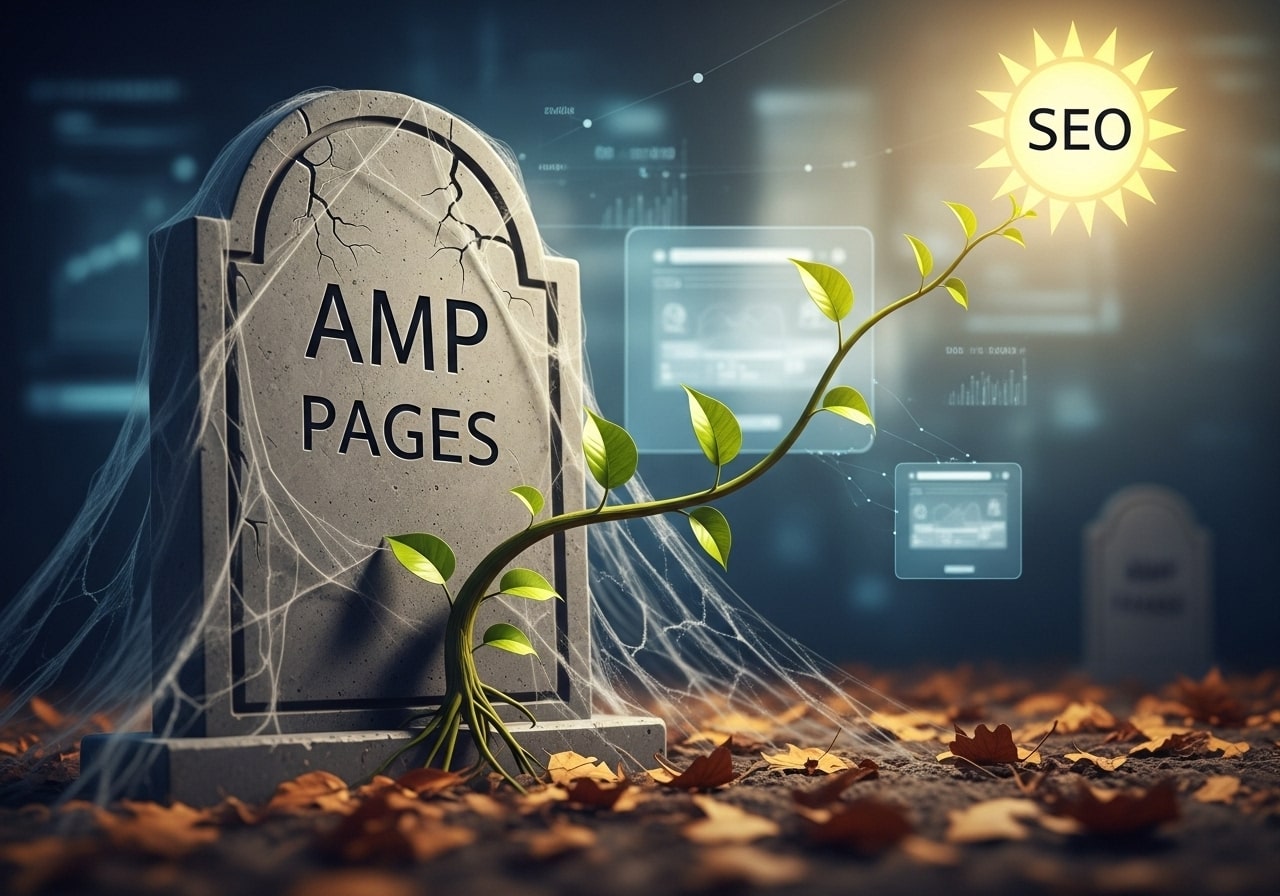
Many website owners and developers are asking the same question these days: are AMP pages dead? With Google’s changing priorities and new web technologies emerging, it’s natural to wonder is AMP still a thing worth investing your time and resources in. This comprehensive guide will help you understand the current state of AMP and make an informed decision for your website.
What Are AMP Pages?
AMP (Accelerated Mobile Pages) is an open-source framework created by Google in 2015 to make web pages load faster on mobile devices. What are AMP pages exactly? They’re stripped-down versions of regular web pages that use simplified HTML, restricted CSS, and optimized JavaScript to deliver content quickly.
The main features of AMP include:
- Lightning-fast loading speeds
- Mobile-first design approach
- Limited JavaScript functionality
- Cached versions served by Google
- Specific HTML tags and structure requirements
When AMP first launched, it promised to solve the growing problem of slow-loading mobile websites. Publishers quickly adopted the technology, hoping to improve user experience and gain better search rankings.
The Current State of AMP
To understand whether are AMP pages dead, we need to look at what’s happened to the technology over the past few years. The short answer is no, AMP is not completely dead, but its importance has significantly decreased.
Google made several major changes that affected AMP’s relevance:
Core Web Vitals Introduction: In 2021, Google introduced Core Web Vitals as ranking factors. These metrics measure actual user experience rather than just page speed, reducing AMP’s unique advantage.
Page Experience Update: Google’s page experience update meant that any fast-loading page could compete with AMP pages, regardless of the technology used.
Top Stories Changes: Google removed the AMP requirement for appearing in Top Stories results, allowing regular fast pages to compete equally.
Mobile-First Indexing: As mobile-first indexing became standard, the need for separate mobile-optimized pages decreased.
Is AMP Still a Thing in 2024?
Is AMP still a thing worth considering? The answer depends on your specific situation. While AMP isn’t as crucial as it once was, it’s still actively maintained and used by many websites.
Current AMP usage includes:
- News websites seeking maximum speed
- E-commerce sites wanting faster product pages
- Blogs focusing on mobile readers
- Websites in regions with slower internet connections
However, many major websites have moved away from AMP. Notable companies that removed AMP include:
- The Guardian
- Chicago Tribune
- Reuters
- Several WordPress-based sites
The main reason for these departures is that modern web development techniques can achieve similar loading speeds without AMP’s restrictions.
Why Are Some AMP Pages Invalid?
Why are AMP pages invalid is a common question among website owners. AMP validation errors occur for several reasons:
Outdated AMP Components: AMP frequently updates its components, and older implementations may become invalid.
Incorrect HTML Structure: AMP requires specific HTML tags and structure. Using regular HTML elements often causes validation errors.
CSS Restrictions Violations: AMP limits CSS to 50KB and prohibits certain styles, causing validation failures when these limits are exceeded.
JavaScript Issues: AMP only allows specific JavaScript components, so custom scripts often cause invalidity.
Missing Required Elements: AMP pages must include specific metadata and structured data to remain valid.
To fix these issues, regularly check your AMP pages using Google’s AMP Validator and keep your AMP implementation updated.
Do AMP Pages Still Rank Higher?
Do AMP pages rank higher in search results? This is perhaps the most important question for SEO-focused website owners. The current answer is more nuanced than it used to be.
Historical Advantage: In the past, AMP pages had clear ranking advantages, especially for mobile searches and news content.
Current Situation: Google now treats page speed and user experience as ranking factors regardless of the technology used. A well-optimized regular page can rank just as well as an AMP page.
Ranking Factors That Matter More:
- Core Web Vitals scores
- Overall page experience
- Content quality and relevance
- Mobile-friendliness
- Site authority and backlinks
The key takeaway is that AMP pages don’t automatically rank higher anymore. What matters most is delivering a fast, user-friendly experience, which can be achieved with or without AMP.
Common AMP Issues and Problems
Understanding what is an AMP issue helps website owners troubleshoot their implementations. Common problems include:
Performance Issues: Ironically, some AMP pages load slower than optimized regular pages due to poor implementation or heavy third-party scripts.
Limited Functionality: AMP’s restrictions can prevent websites from offering full functionality, leading to poor user experience.
Maintenance Burden: Keeping both regular and AMP versions of pages requires additional resources and can lead to content inconsistencies.
Analytics Complications: Tracking user behavior across AMP and non-AMP versions can be challenging and may result in incomplete data.
Design Limitations: AMP’s CSS restrictions can make it difficult to maintain brand consistency and implement complex designs.
Are AMP Pages Worth It Today?
Are AMP pages worth it in 2024? The answer depends on several factors specific to your website and goals.
AMP Might Be Worth It If:
- Your current mobile pages load very slowly
- You publish time-sensitive news content
- Your audience primarily uses slower internet connections
- You have development resources to maintain both versions
- You’re in a highly competitive news or publishing niche
AMP Might Not Be Worth It If:
- Your regular pages already load quickly
- You need complex functionality or design elements
- You have limited development resources
- Your content doesn’t benefit from immediate loading
- Your audience expects rich interactive features
Many website owners find that investing in general page speed optimization provides better results than implementing AMP.
Why Some People Say AMP is Bad
Understanding why are AMP pages bad according to critics helps provide a balanced perspective. Common criticisms include:
Limited Creative Control: AMP’s restrictions can stifle creative web design and limit functionality.
Dependency on Google: Critics argue that AMP increases reliance on Google’s ecosystem and infrastructure.
Maintenance Overhead: Running parallel AMP and regular versions requires additional time and resources.
User Experience Issues: Some users report confusion when navigating between AMP and regular pages.
Revenue Impact: Publishers sometimes see reduced ad revenue on AMP pages due to limited ad formats.
Technical Debt: Maintaining legacy AMP code can become burdensome as web standards evolve.
However, it’s important to note that these issues don’t affect every website equally, and some organizations still benefit from AMP.
How to Validate AMP Pages
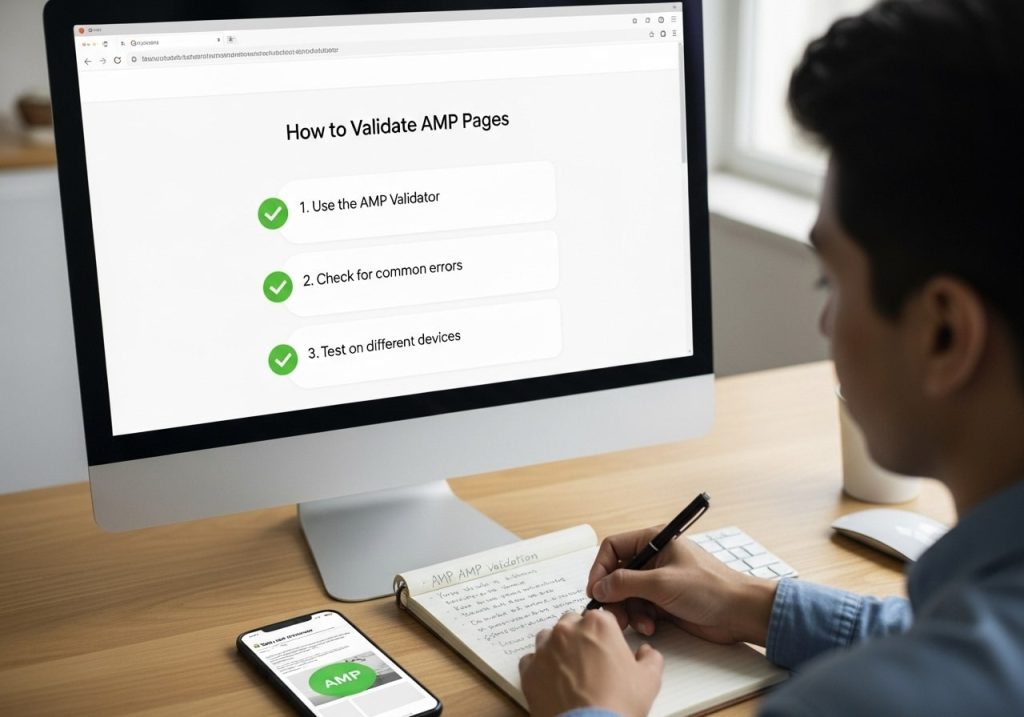
How to validate AMP pages is crucial for maintaining proper implementation. Here’s a step-by-step process:
Use Google’s AMP Validator:
- Visit validator.ampproject.org
- Enter your AMP page URL
- Review any errors or warnings
- Fix issues one by one
Check Google Search Console:
- Monitor AMP status reports
- Review error details and affected pages
- Track validation improvements over time
Common Validation Steps:
- Ensure all required AMP HTML tags are present
- Verify CSS doesn’t exceed 50KB limit
- Check that all images have specified dimensions
- Confirm structured data is properly implemented
- Test page loading in AMP cache
Regular Monitoring: Set up automated monitoring to catch validation issues quickly and maintain AMP compliance.
The Future of AMP
Looking ahead, is AMP deprecated or heading toward obsolescence? While Google hasn’t officially deprecated AMP, its future importance continues to decline.
Industry Trends:
- Focus shifting to Core Web Vitals and overall page experience
- Modern web technologies making AMP’s benefits less unique
- Decreased emphasis on AMP in Google’s documentation and updates
- Major publishers moving away from AMP
Technological Developments:
- Progressive Web Apps (PWAs) offering similar benefits with more flexibility
- Improved browser caching and loading mechanisms
- Better mobile network speeds reducing the need for extreme optimization
- Advanced CSS and JavaScript optimization tools
Google’s Position: While Google continues supporting AMP, they’ve clearly shifted focus toward broader web performance standards rather than promoting AMP specifically.
Should You Keep or Remove AMP?
Deciding whether to maintain AMP implementation requires careful consideration of your specific situation.
Consider Keeping AMP If:
- You’re already seeing significant traffic from AMP pages
- Your regular pages can’t match AMP loading speeds
- You publish breaking news or time-sensitive content
- Your development team can easily maintain both versions
- Your analytics show positive user engagement on AMP pages
Consider Removing AMP If:
- Maintenance costs exceed benefits
- You need functionality that AMP restricts
- Your regular pages already load quickly
- User analytics show poor AMP engagement
- You want to simplify your technical infrastructure
Migration Strategy: If you decide to remove AMP, plan a gradual transition. Improve your regular pages’ speed first, then implement proper redirects from AMP URLs to regular pages to maintain SEO value.
Conclusion
So, are AMP pages dead? The technology isn’t completely dead, but it’s no longer the essential tool it once was. The web has evolved, and Google’s ranking factors have shifted toward rewarding good user experience regardless of the underlying technology.
The most important thing is to focus on creating fast, user-friendly pages that provide value to your visitors. Whether you achieve this with AMP, modern web optimization techniques, or other technologies is less important than the end result.
If you’re currently using AMP and it’s working well for your website, there’s no urgent need to remove it. However, if you’re considering implementing AMP for the first time, you might get better results by investing that effort in general page speed optimization.
What’s your experience with AMP pages? Have you seen benefits from using them, or are you considering making a change? Share your thoughts and questions in the comments below – your insights could help other website owners make informed decisions about their mobile optimization strategy.
FAQs
What are AMP pages exactly?
AMP stands for Accelerated Mobile Pages. These are super lightweight versions of your web pages that load almost instantly on mobile devices. Google created this technology back in 2015 to make mobile browsing faster and smoother for users.
Are AMP pages actually dead in 2024?
Not exactly dead, but they’re not as important as they used to be. Google removed the AMP requirement for their Top Stories carousel in 2021, and many big websites have stopped using AMP. However, some sites still use them, especially news publishers and e-commerce stores that want lightning-fast mobile pages.
Do AMP pages still help with SEO rankings?
AMP pages don’t directly boost your search rankings anymore. Google has confirmed that AMP isn’t a ranking factor. What really matters now is your page speed and Core Web Vitals. If your regular pages load fast enough, you probably don’t need AMP for SEO benefits.
Why did so many websites stop using AMP?
Many websites dropped AMP because it became more trouble than it was worth. AMP pages often broke website features, made analytics tracking harder, and took extra time to maintain. Plus, when Google removed the Top Stories requirement for AMP, the main incentive disappeared.
Should I remove AMP from my existing website?
That depends on your specific situation. If your AMP pages get decent traffic and work well, you might want to keep them. But if they’re causing problems or requiring too much maintenance, it’s probably safe to remove them. Just make sure to set up proper redirects to avoid losing any search rankings.
What should I focus on instead of AMP for mobile SEO?
Focus on making your regular mobile pages fast and user-friendly. Work on improving your Core Web Vitals scores, optimize your images, minimize your code, and use a good content delivery network (CDN). These improvements will benefit all your users, not just mobile ones.
Are there any websites that should still consider using AMP?
News websites and blogs that publish lots of articles might still benefit from AMP, especially if they get traffic from Google Discover. E-commerce sites with simple product pages could also see benefits, but only if they can’t make their regular pages load fast enough.
How do I know if my website needs AMP?
Test your mobile page speed using Google PageSpeed Insights or similar tools. If your pages load in under 3 seconds and have good Core Web Vitals scores, you probably don’t need AMP. If your pages are slow and you can’t fix the speed issues easily, AMP might help as a short-term solution.
What happens to my search traffic if I remove AMP?
Most websites don’t see any negative impact on their search traffic after removing AMP. Some even see improvements because they can focus their efforts on optimizing their main pages instead of maintaining two versions. Just make sure to implement the removal properly with redirects.
Is Google planning to bring back AMP requirements?
There’s no indication that Google plans to make AMP important again for search rankings. Google seems more focused on their Core Web Vitals initiative, which measures actual page performance rather than requiring a specific technology like AMP. Your time is probably better spent optimizing your regular pages.