
Picture this: you’ve found your dream home, negotiated the perfect price, and you’re ready to close. Then your attorney calls with bad news – there’s a common title issue that could stop the sale completely. Understanding most common title issues before you encounter them can save you thousands of dollars and months of frustration.
Understanding Title Issues
What is a Title Issue?
A title issue is any problem with the legal ownership of a property that prevents a clean transfer from seller to buyer. These problems can range from simple paperwork errors to complex legal disputes that have existed for decades.
When you buy property, you’re not just purchasing the physical building and land – you’re buying the legal right to own it. Issues with title can cloud that ownership and create serious problems down the road.
Why Title Issues Matter
Title problems don’t just affect the current transaction. They can:
- Block your ability to sell the property later
- Prevent you from refinancing your mortgage
- Create liability for debts you didn’t know existed
- Result in costly legal battles
- Lead to loss of the property entirely in extreme cases
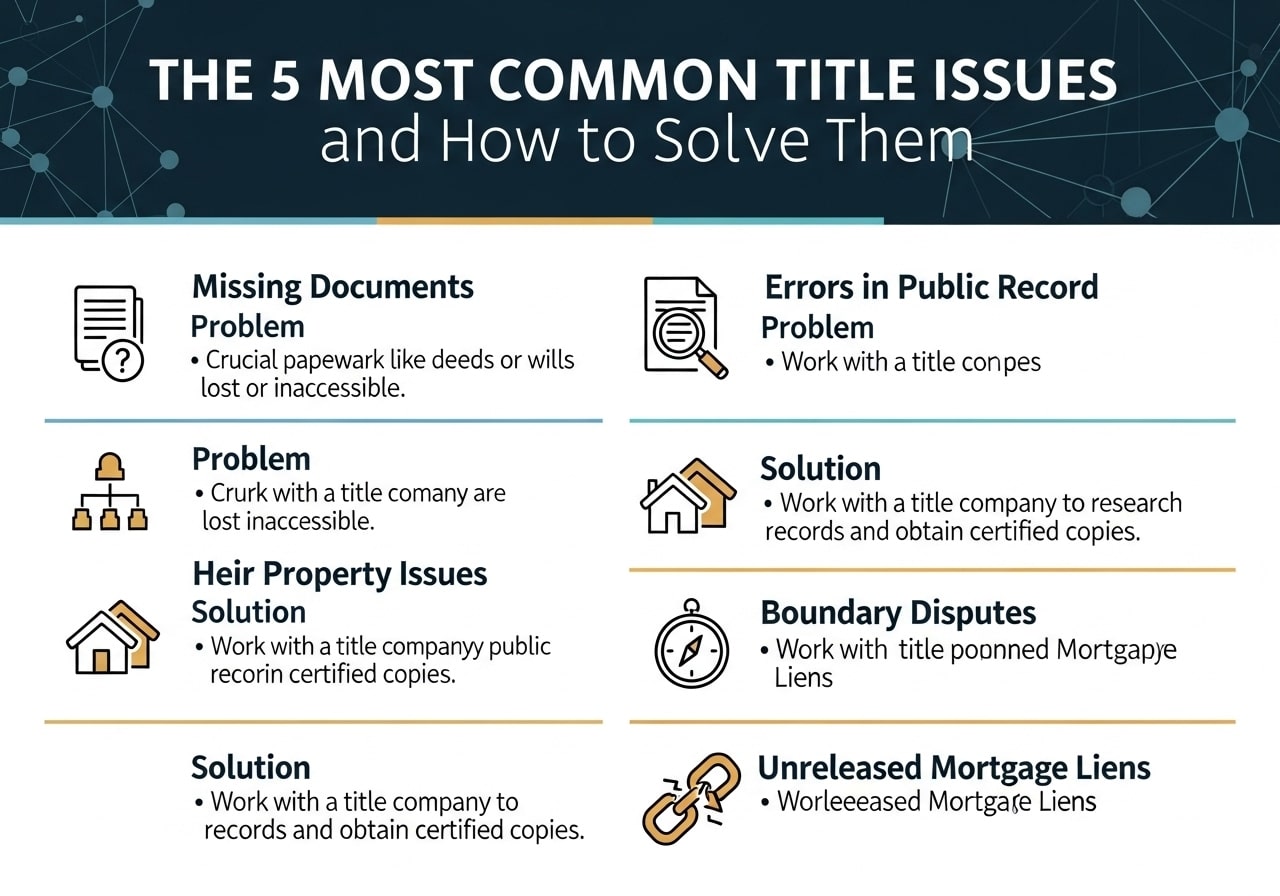
The 5 Most Common Title Issues
1. Liens Against the Property
Liens are legal claims against a property for unpaid debts. Common title problems involving liens include:
Tax Liens: When property taxes go unpaid, the government places a lien on the property. These liens take priority over almost all other debts and must be paid before the property can be sold.
Mechanic’s Liens: Contractors, suppliers, or laborers who weren’t paid for work on the property can file mechanic’s liens. Even if you weren’t the one who hired them, these liens can attach to your property.
Judgment Liens: If someone wins a lawsuit against the property owner, they can place a judgment lien on the property to secure payment.
HOA Liens: Homeowners associations can place liens for unpaid dues, special assessments, or fines.
2. Errors in Public Records
Public records contain all the official information about property ownership, and mistakes in these records create common title defects. These errors include:
- Incorrect property descriptions or boundaries
- Misspelled names of owners
- Wrong filing dates
- Clerical errors in deeds or mortgages
- Missing documents that should have been recorded
Even small errors can create big problems. For example, if your name is misspelled on the deed, you might have trouble proving you own the property when you try to sell.
3. Unknown Heirs and Estate Issues
When property owners die, their property must go through the legal process of transferring to their heirs. Problems arise when:
- The previous owner died without a will
- Heirs weren’t properly notified during estate proceedings
- Someone contests the will after the property is sold
- Long-lost relatives surface with claims to the property
- Estate proceedings weren’t completed properly
These types of title issues can be particularly tricky because unknown heirs might not appear until years after you’ve purchased the property.
4. Boundary and Survey Disputes
Property boundary problems are among the most common title issues and include:
Encroachments: When structures like fences, buildings, or driveways cross property lines. Your neighbor’s fence might actually be three feet onto your property, or your driveway might extend onto theirs.
Easement Disputes: Easements give others the right to use part of your property for specific purposes, like utility lines or access roads. Disputes arise when easements aren’t properly documented or when their scope is unclear.
Survey Errors: Old or inaccurate surveys can create confusion about where property lines actually fall. Modern GPS technology often reveals that older surveys were incorrect.
5. Fraud and Forgery
Unfortunately, real estate fraud creates serious title company issues and includes:
- Forged signatures on deeds or mortgages
- Identity theft where someone impersonates the property owner
- Fraudulent notarization of documents
- Fake powers of attorney used to sell property without the owner’s knowledge
These cases often result in common title insurance claims because the fraud isn’t discovered until years later.
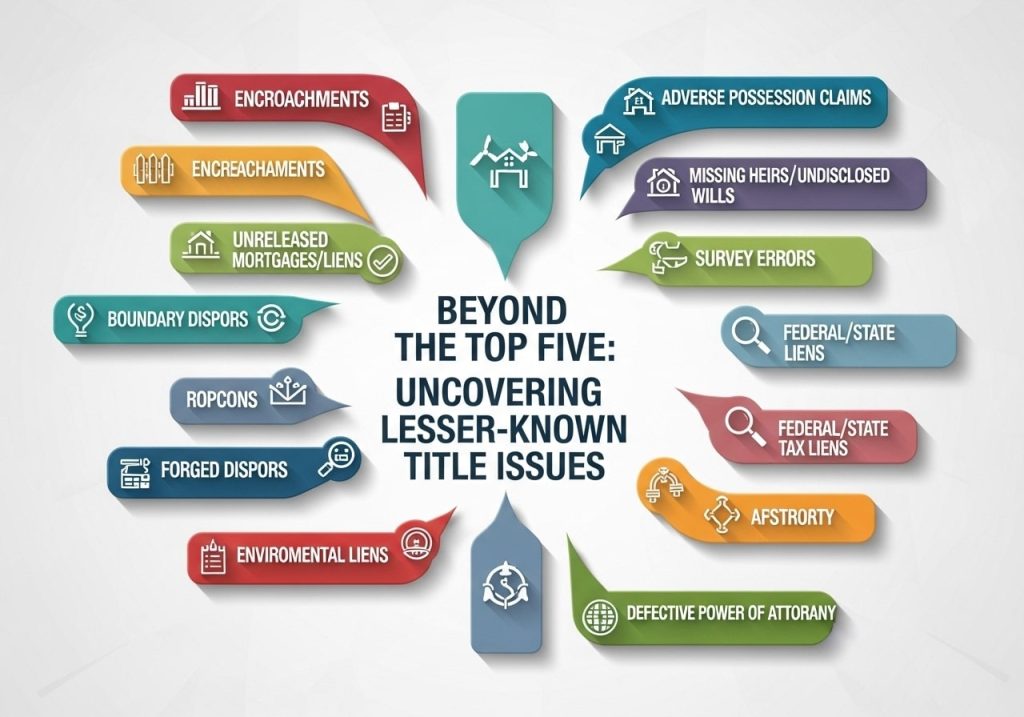
Types of Title Issues Beyond the Top Five
Divorce and Separation Problems
When married couples divorce, property division can create lasting title problems. Issues include:
- Ex-spouses who won’t sign quit claim deeds
- Hidden assets discovered after divorce
- Disputes over who has the right to sell jointly-owned property
Missing Documents
Sometimes important documents are lost or never properly recorded:
- Missing deeds from previous transfers
- Lost mortgage satisfaction letters
- Unrecorded easements or restrictions
Zoning and Land Use Violations
Properties might have violations that affect their title:
- Buildings constructed without proper permits
- Zoning violations that affect property use
- Environmental restrictions not disclosed in previous sales
Common Title Insurance Claims
Understanding most common title insurance claims helps explain why title insurance is so important:
Lien Claims
About 25% of all title insurance claims involve liens that weren’t discovered during the initial title search. These include:
- Old tax liens from previous owners
- Mechanic’s liens filed after closing
- HOA liens for unpaid assessments
Boundary Issues
Roughly 20% of claims involve boundary disputes and survey problems. These claims often arise when:
- Neighbors dispute fence lines
- New surveys reveal encroachments
- Easement rights are challenged
Document Problems
About 15% of claims stem from problems with legal documents:
- Deeds with incorrect information
- Forged signatures
- Improperly notarized documents
Heir and Estate Issues
Around 10% of claims involve unknown heirs or estate problems that surface after closing.
Title Company Issues and Red Flags
Not all title companies provide the same level of service. Watch for these red flags:
Poor Communication
- Slow responses to questions
- Unclear explanations of title problems
- Pressure to close without resolving issues
Inadequate Searches
- Rushed title searches that miss problems
- Failure to check all relevant records
- Not reviewing recent filings
Limited Insurance Coverage
- Policies that exclude common problems
- Low coverage amounts
- Unclear policy terms
How to Choose a Good Title Company
- Check their reputation and reviews
- Ask about their search procedures
- Verify their insurance coverage
- Get recommendations from real estate professionals
Car Title Issues vs. Real Estate Titles
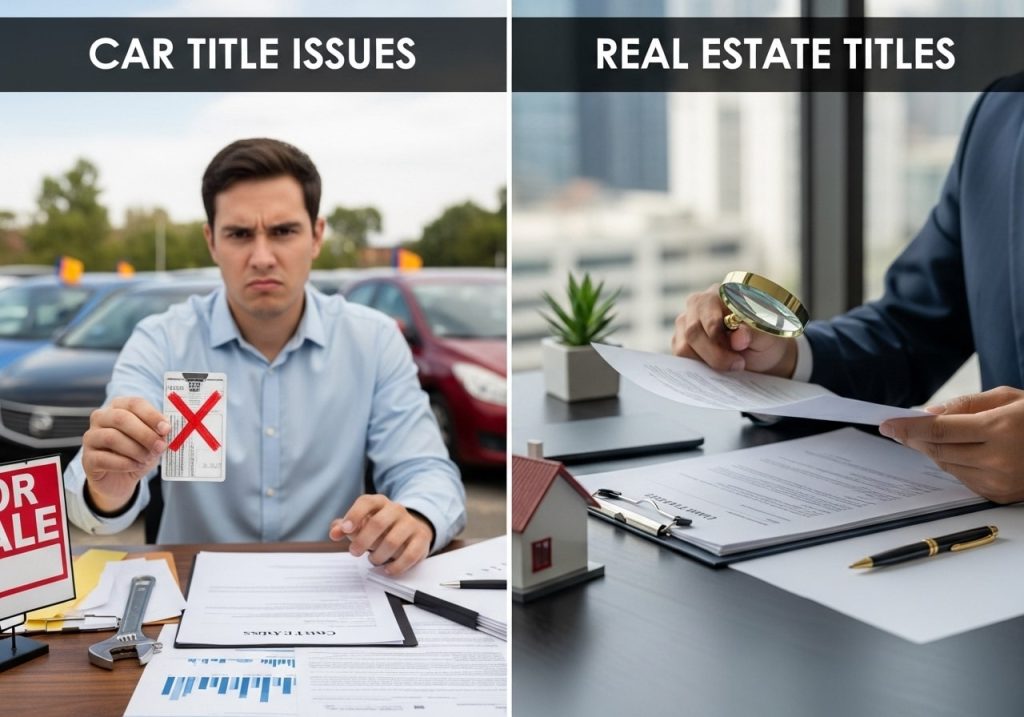
While this article focuses mainly on real estate, car title issues share some similarities:
Common Car Title Problems
- Lost or damaged titles
- Liens from auto loans not properly released
- Fraud in title transfers
- Errors in vehicle information
Key Differences
- Car titles are simpler documents
- Real estate titles have more complex ownership histories
- Car title problems are usually easier and cheaper to fix
- Real estate title insurance lasts forever, car titles don’t need insurance
Most Common Title Endorsements
Common title endorsements provide additional coverage beyond basic title insurance:
Access Endorsement
Protects against problems with legal access to the property. This is important for properties that don’t front on public roads.
Survey Endorsement
Provides coverage for survey-related problems like boundary disputes and encroachments.
Zoning Endorsement
Protects against losses from zoning violations or restrictions that affect property use.
Environmental Endorsement
Covers problems related to environmental hazards or contamination.
Subdivision Endorsement
Important for new construction, this endorsement protects against problems with subdivision plats and restrictions.
How to Protect Yourself
Before You Buy
- Hire an experienced real estate attorney
- Get a thorough title search from a reputable company
- Purchase both owner’s and lender’s title insurance
- Review all title documents carefully
- Don’t rush the closing process
During the Title Process
- Ask questions about any problems found
- Require that all liens be paid before closing
- Get new surveys for older properties
- Verify that all previous owners signed proper documents
After Closing
- Keep all title documents in a safe place
- Monitor your property for encroachments
- Stay current on property taxes
- Notify your title company immediately if problems arise
Common Title Questions Answered
How Long Does Title Insurance Last?
Owner’s title insurance lasts as long as you or your heirs own the property. Unlike other insurance that requires annual premiums, title insurance is a one-time purchase.
Can Title Issues Be Fixed?
Most title issues can be resolved, but the process can take time and money. Simple problems like clerical errors might be fixed quickly, while complex issues like heir disputes can take months or years.
Who Pays for Title Insurance?
Customs vary by location. In some areas, the buyer pays for both owner’s and lender’s policies. In others, the seller pays for the owner’s policy and the buyer pays for the lender’s policy.
What’s Not Covered by Title Insurance?
Title insurance doesn’t cover:
- Problems that arise after you buy the property
- Issues you knew about before closing
- Government actions like eminent domain
- Environmental problems (unless you buy special coverage)
How Much Does Title Insurance Cost?
Title insurance typically costs between 0.5% and 1% of the property’s purchase price. This one-time fee provides coverage for as long as you own the property.
Can I Buy Title Insurance After Closing?
Generally, you can only purchase title insurance at closing. Some companies might sell policies shortly after closing, but it’s much better to buy coverage before you complete the purchase.
Understanding common title issues is crucial for anyone buying real estate. While title problems can seem overwhelming, working with experienced professionals and purchasing proper insurance can protect you from most risks. Don’t let most common title issues catch you off guard – do your homework before you buy, and you’ll be much more likely to have a smooth transaction and worry-free ownership.
The key is preparation and professional help. By knowing what are the five most common title issues and how to address them, you can navigate the real estate process with confidence and avoid costly surprises that could affect your investment for years to come.
Ready to buy real estate? Contact a qualified real estate attorney and reputable title company to ensure your transaction goes smoothly and your ownership rights are fully protected.
FAQs
What are the most common title problems that property buyers face?
The five most common title issues include liens against the property, boundary disputes with neighbors, errors in public records, missing heirs or previous owners, and unpaid taxes or assessments. These problems can delay or prevent property sales if not addressed properly.
How do I know if there are liens on a property I want to buy?
A title search will reveal any liens on the property. This includes mortgage liens, tax liens, mechanic’s liens from contractors, or judgment liens from court cases. Your real estate attorney or title company will conduct this search as part of the buying process.
What should I do if there are errors in the public records for my property?
Contact your local county recorder’s office or registrar of deeds to file a correction. You’ll need to provide documentation proving the error, such as surveys, deeds, or other official records. Your attorney can help prepare the necessary paperwork to fix these mistakes.
How can boundary disputes affect my property title?
Boundary disputes occur when property lines are unclear or when neighbors disagree about where one property ends and another begins. This can make your title unclear and affect your ability to sell. A professional land survey can help resolve these issues by clearly marking property boundaries.
What happens if there are missing heirs from a previous property owner?
Missing heirs can claim ownership rights even after you’ve bought the property. To solve this, you may need to conduct a thorough search for all heirs or obtain title insurance that protects against such claims. Sometimes legal proceedings are needed to clear the title completely.
Can unpaid property taxes prevent me from getting clear title?
Yes, unpaid property taxes create liens that must be paid before the title can transfer cleanly. The current owner or buyer typically needs to pay these taxes at closing. Your title company will identify any tax issues during their search.
How long does it take to resolve title issues?
The time varies depending on the problem. Simple record corrections might take a few weeks, while complex issues like missing heirs or boundary disputes can take several months. It’s best to start the title search early in the buying process.
Do I need title insurance if title issues are found and fixed?
Yes, title insurance is still important even after resolving known issues. It protects you against future claims or problems that weren’t discovered during the title search. Most lenders require title insurance, and it’s wise protection for buyers too.
Can I still buy a property that has title issues?
You can often still purchase the property, but the title issues must be resolved before or at closing. Sometimes buyers negotiate with sellers to fix problems before the sale, or they may ask for price reductions to cover the cost of solving title issues.
Should I hire an attorney to help with title problems?
Yes, hiring a real estate attorney is recommended when dealing with title issues. They can guide you through the legal processes needed to clear problems, communicate with other parties involved, and ensure your interests are protected throughout the resolution process.