
Voice search is changing how people find information online, and understanding the benefits of voice search optimization can give your business a competitive edge. With over 4.2 billion voice assistants in use worldwide, voice search optimization in digital marketing has become essential for businesses wanting to stay ahead of the curve.
What is Voice Search Optimization?
Voice search optimization is the process of improving your website and content to appear in voice search results. When someone asks their smartphone, smart speaker, or other voice-enabled device a question, the device searches the internet and provides a spoken answer. This technology uses artificial intelligence and natural language processing to understand what people are asking and deliver the best possible response.
Voice recognition search in SEO works differently from traditional text-based searches. People speak more naturally when using voice search, often asking complete questions rather than typing short keyword phrases. For example, instead of typing “pizza near me,” someone might ask, “Where can I find the best pizza restaurant close to my location?”
How Voice Search Affects SEO
How does voice search affect SEO? The impact is significant and growing. Voice searches tend to be longer and more conversational than text searches. They often include question words like “who,” “what,” “where,” “when,” “why,” and “how.” This shift means businesses need to optimize their content for natural language queries and focus on providing direct, helpful answers.
How Does Voice Search Work?
Understanding how voice search technology operates helps explain why voice search optimization is important. When you speak to a voice assistant, several steps happen quickly:
- Speech Recognition: The device converts your spoken words into text
- Natural Language Processing: AI analyzes the meaning and context of your question
- Search and Retrieval: The system searches for relevant information online
- Response Generation: The device selects the best answer and converts it back to speech
- Audio Output: You hear the spoken response
Does voice search use AI? Yes, artificial intelligence is central to voice search functionality. Voice search optimization AI helps devices understand accents, context, and the intent behind questions, making the technology more accurate and useful over time.
Key Benefits of Voice Search Optimization
1. Increased Website Traffic and Visibility
One of the primary benefits of voice search optimization in business is improved online visibility. When your content is optimized for voice queries, you have a better chance of being selected as the answer to user questions. This can lead to significant increases in website traffic, especially for local businesses.
2. Better User Experience
Why do people use voice search? The answer is simple: convenience. Voice search is faster and more natural than typing, especially when people are multitasking, driving, or have their hands full. By optimizing for voice search, you’re making it easier for customers to find and interact with your business.
3. Competitive Advantage
Many businesses haven’t yet invested in voice search SEO optimization<span data-preserver-spaces=”true”>, which means early adopters can gain a significant advantage. Companies that start optimizing now will be better positioned as voice search continues to grow in popularity.
4. Local SEO Benefits
How does voice search affect local SEO strategies? Voice search has a huge impact on local businesses. Studies show that nearly 60% of voice searches are looking for local information. People frequently ask questions like “Where’s the nearest coffee shop?” or “What time does the pharmacy close?” Optimizing for these local voice queries can drive foot traffic and phone calls to your business.
5. Mobile-First Approach
With smartphones being the primary device for voice searches, voice search optimization in marketing naturally supports mobile-first strategies. This alignment with mobile usage patterns helps businesses reach customers where they are most active.
Voice Search vs Traditional Search: Understanding the Difference
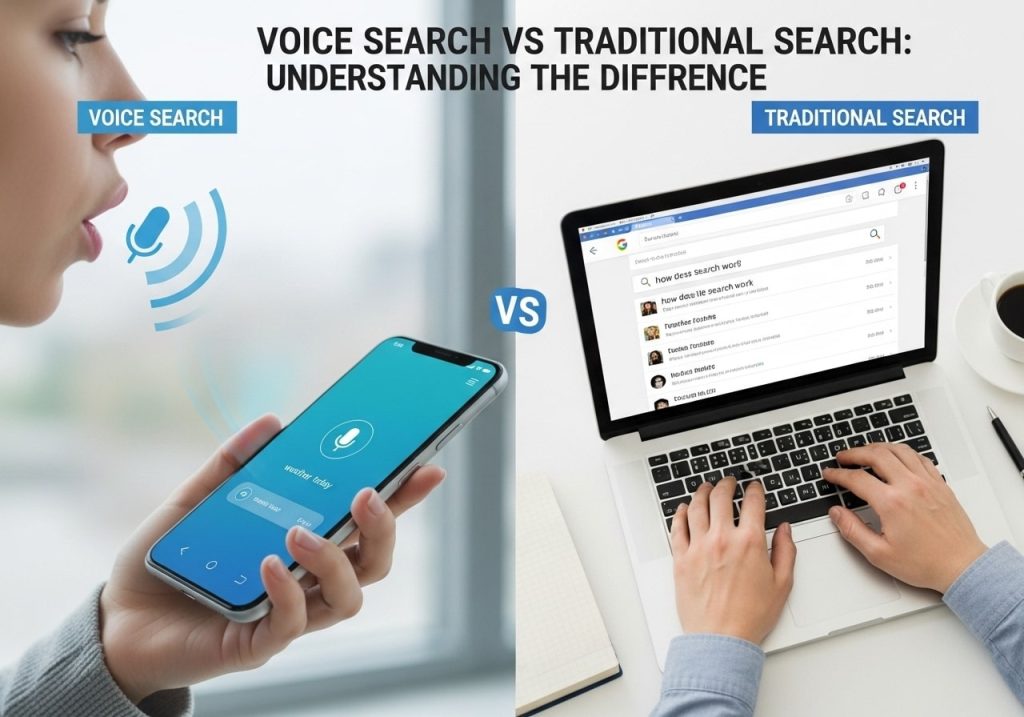
How does voice search differ from traditional search methods? The differences are substantial and affect how businesses should approach SEO:
Traditional Search Characteristics:
- Short, keyword-focused phrases
- Written queries
- Multiple results reviewed
- Visual interface
- Desktop and mobile devices
Voice Search Characteristics:
- Longer, conversational queries
- Spoken questions
- Single answer preferred
- Audio interface
- Primarily mobile and smart speakers
What is the difference between text search and voice search? Text searches often use abbreviated language, while voice searches mirror natural speech patterns. This difference requires different optimization strategies and content approaches.
Why Voice Search is Preferred Over Traditional Search
Why voice search is preferred over traditional search comes down to user behavior and convenience:
- Speed: Speaking is faster than typing for most people
- Multitasking: Users can search while doing other activities
- Natural Language: People can ask questions normally
- Accessibility: Helpful for users with mobility or vision challenges
- Hands-Free: Useful while driving, cooking, or exercising
Voice Search Optimization Techniques and Tools
Essential Voice Search Optimization Techniques
Voice search optimization techniques include several key strategies:
1. Focus on Conversational Keywords
Traditional keyword research needs to evolve for voice search. Voice search keyword research should focus on natural language patterns and question-based queries. Use tools like Answer the Public or Google’s “People Also Ask” feature to find common questions in your industry.
2. Create FAQ Content
Frequently Asked Questions pages are perfect for voice search optimization. They naturally match the question-and-answer format that voice searches use.
3. Optimize for Featured Snippets
Voice assistants often read featured snippets as answers to voice queries. Structure your content to answer questions clearly and concisely in the first few sentences.
4. Use Schema Markup
Structured data helps search engines understand your content better, increasing the chances of being selected for voice search results.
5. Focus on Local SEO
For location-based businesses, ensure your Google My Business profile is complete and accurate. Include local keywords and answer location-specific questions.
Voice Search Optimization Tools
Several voice search optimization tools can help improve your strategy:
- Google Search Console: Monitor which queries bring traffic to your site
- SEMrush: Research voice search keywords and track rankings
- Answer the Public: Find question-based keywords
- Ahrefs: Analyze competitor voice search strategies
- BrightLocal: Track local voice search performance
Voice Search Optimization Examples
What is an example of voice search optimization? Consider a local restaurant that optimizes for voice search:
- Traditional SEO: Target “Italian restaurant downtown”
- Voice Search SEO: Target “Where can I find authentic Italian food near me?” or “What’s the best Italian restaurant in downtown Cleveland?”
The restaurant would create content answering these specific questions and ensure their local listings are accurate and complete.
The Future of Voice Search Optimization

What is the future of voice search optimization? The trend is clearly growing. Current statistics show that what percentage of people use voice search varies by study, but most research indicates that over 50% of adults use voice search daily, with the number continuing to rise.
Growing Usage Statistics
How many people use voice search daily? Recent studies suggest:
- 71% of people prefer voice search over typing
- Voice commerce is expected to reach $40 billion by 2025
- 55% of households are expected to own smart speakers by 2025
Emerging Trends
What is the rise of voice search and its impact on SEO? The impact includes:
- More conversational content strategies
- Increased focus on local SEO
- Greater emphasis on mobile optimization
- Need for faster website loading speeds
- Importance of accurate business information
Getting Started with Voice Search SEO
Step 1: Audit Your Current Content
Review your existing content to see how well it answers common customer questions. Identify gaps where you could provide better, more comprehensive answers.
Step 2: Research Voice Search Keywords
How do I optimize for voice search? Start with keyword research focused on natural language and questions. Think about how your customers would verbally ask about your products or services.
Step 3: Create Question-Based Content
Develop content that directly answers the questions your customers are asking. Use clear, concise language and provide complete answers.
Step 4: Optimize Technical Elements
Ensure your website loads quickly, is mobile-friendly, and uses structured data markup to help search engines understand your content.
Step 5: Monitor and Adjust
Track your voice search performance and adjust your strategy based on what’s working. Voice search optimization is an ongoing process that requires regular attention.
Conclusion
The benefits of voice search optimization are clear and growing. As more people adopt voice search technology, businesses that optimize their content and websites for voice queries will have significant advantages in visibility, traffic, and customer engagement.
Is voice search good for business? Absolutely. Voice search optimization helps businesses connect with customers in a more natural, convenient way while improving their overall digital marketing performance. The key is to start now, before your competitors gain the advantage.
By understanding how voice search optimization works and implementing the strategies outlined in this guide, your business can successfully adapt to this important shift in how people search for information online. The future belongs to businesses that make it easy for customers to find them through voice search.
Ready to start your voice search optimization journey? Begin by researching the questions your customers ask and creating content that provides clear, helpful answers. Your future customers are already asking – make sure they can find you.
FAQs
What is voice search optimization?
Voice search optimization is the process of making your website and content work better with voice searches. When people ask Alexa, Google Assistant, or Siri questions, you want your business to show up in those results. It means adjusting your website content to match how people naturally speak rather than how they type.
Why should my business care about voice search?
More people use voice search every day. They ask their phones questions while driving, cooking, or when their hands are busy. If your business doesn’t show up in voice search results, you’re missing out on potential customers. Plus, voice searches often lead to local business visits, which is great for getting foot traffic.
How is voice search different from regular search?
When people type, they use short phrases like “pizza near me.” But when they speak, they ask full questions like “Where’s the best pizza place close to my location?” Voice searches are longer, more conversational, and often include question words like who, what, where, when, and how.
What types of businesses benefit most from voice search optimization?
Local businesses like restaurants, stores, service providers, and healthcare practices see the biggest benefits. People often use voice search to find nearby businesses or get quick answers about services. But really, any business can benefit if their customers might search for their products or services using voice.
How can voice search help my business grow?
Voice search can bring you more customers in several ways. You’ll show up when people ask questions related to your business, you’ll get found by people looking for local services, and you’ll reach customers at the exact moment they need what you offer. Many voice searches also lead to immediate action, like calling or visiting your business.
What should I do to optimize my website for voice search?
Start by creating content that answers common questions your customers ask. Use natural, conversational language. Make sure your Google My Business listing is complete and accurate. Create FAQ pages that match how people actually talk. Also, make sure your website loads quickly since voice search results need to be fast.
Do I need to change my entire website for voice search?
No, you don’t need to rebuild everything. You can add voice search optimization gradually. Start by adding FAQ sections, updating your content to include conversational phrases, and making sure your local business information is correct across the web. Small changes can make a big difference.
How do I know if my voice search optimization is working?
You can track several things to see if it’s working. Look for increases in local search traffic, more phone calls to your business, and higher rankings for question-based searches. You can also check if your business shows up when you ask voice assistants questions about your industry or location.
How long does it take to see results from voice search optimization?
Like most SEO efforts, voice search optimization takes time. You might start seeing some results in a few weeks, but it typically takes 2-6 months to see significant changes. The key is to be consistent and keep creating content that matches how your customers naturally speak and ask questions.
Can I do voice search optimization myself or do I need to hire someone?
You can definitely start with the basics yourself. Creating FAQ content, updating your business listings, and writing in a more conversational tone are things any business owner can do. However, if you want more advanced optimization or don’t have time to do it consistently, working with a digital marketing professional can speed up the process and get better results.